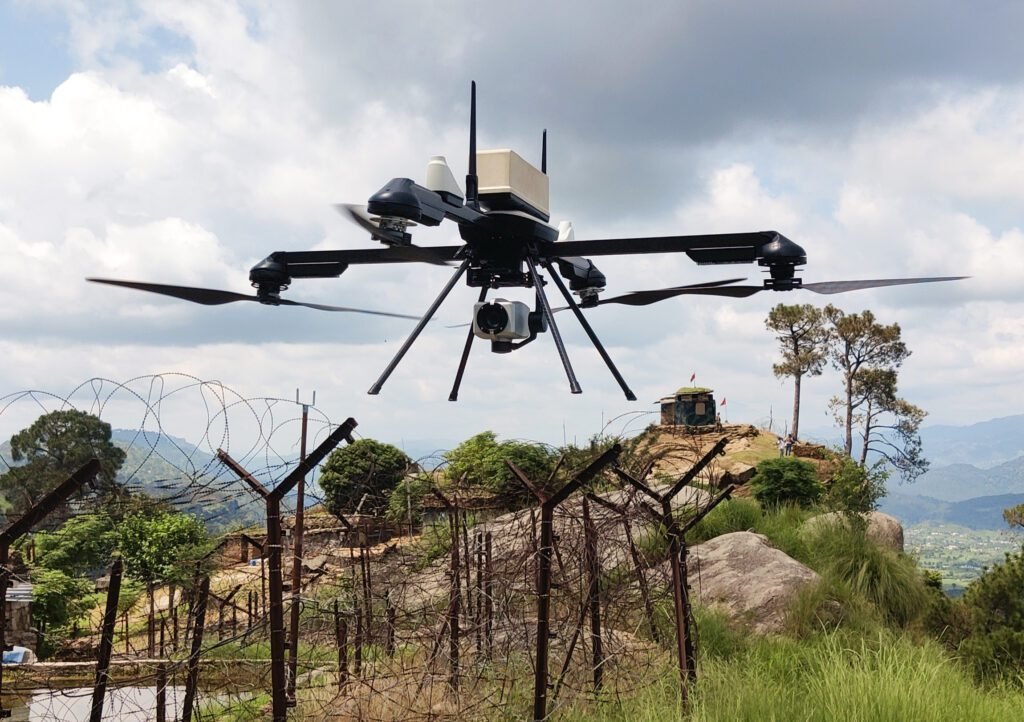
The sergeant hands you the keys to the department’s new $15,000 thermal drone. “You’ve got your Part 107, right? You’re good to go.”
Three months later, you respond to a search and rescue call. A child is missing in dense woods as darkness falls. You launch the drone to assist—operating at night, beyond visual line of sight, over people actively searching the area.
Every one of those operations violates FAA Part 107 restrictions. Your department’s liability exposure just went from zero to catastrophic, and your Part 107 certification doesn’t authorize a single element of that mission.
This is the reality for public safety agencies across America: Part 107 certification is necessary, but it’s not sufficient for the tactical operations that define law enforcement, fire service, and emergency management drone programs.
Why Part 107 Alone Isn’t Enough for Public Safety
Part 107 was designed for commercial drone operations—real estate photography, construction site mapping, agricultural surveying. These operations happen during daylight, in visual line of sight, away from people, at or below 400 feet.
Public safety missions look nothing like this.
Law enforcement responds to active incidents requiring:
- Immediate deployment regardless of time of day
- Operations over crowds, officers, and suspects
- Beyond visual line of sight pursuit and surveillance
- Flight from moving vehicles during pursuits
- Operations in controlled airspace without delay
Fire service needs:
- Night operations for search and rescue
- Thermal imaging over active fire scenes (with people present)
- Hazardous materials assessment in restricted areas
- Structural assessment beyond visual line of sight
- Operations in Class D airspace near helipads
Emergency management requires:
- Disaster assessment over populated areas
- Extended-range operations beyond visual range
- Coordination with manned aircraft in emergency airspace
- Rapid deployment without standard authorization delays
Part 107 prohibits every single one of these operations by default. Without additional certifications, authorizations, and training, your public safety drone program operates in a permanent state of regulatory non-compliance.
The Two Pathways: Part 107 vs. Certificate of Authorization (COA)
Public safety agencies have two distinct regulatory pathways under FAA rules. Understanding which path—or combination of paths—your agency needs is fundamental to legal operation.
Part 107: The Commercial Framework
What it allows:
- Civil aircraft operations for government agencies
- Faster initial deployment (can be certified in 2-4 weeks)
- Individual pilot certification (portable between agencies)
- Operations under standard commercial rules
What it restricts:
- Daylight operations only (civil twilight with anti-collision lighting)
- Visual line of sight at all times
- No operations over people (without specific waivers)
- No operations from moving vehicles
- No operations in controlled airspace without prior authorization
- 400-foot altitude ceiling
- No autonomous operations
For public safety, Part 107 alone only works for:
- Routine accident scene documentation (during daylight, after scene is secured)
- Daytime search and rescue in unpopulated areas
- Training and proficiency flights
- Pre-planned, non-emergency inspections
Certificate of Authorization (COA): The Public Aircraft Framework
What it enables:
- Public aircraft operations for governmental functions
- Routine operations in controlled airspace (specified in COA)
- Night operations for life safety incidents
- Operations over people during emergencies
- Custom operational provisions based on agency needs
- Self-certification of aircraft and pilots (no FAA aircraft certification required)
- Emergency COA available in as little as 3 hours for immediate life safety situations
What it requires:
- Lengthy application process (typically 90-180 days for initial COA)
- Comprehensive operational procedures and safety documentation
- Coordination with local FAA Flight Standards District Office
- Dedicated administrative oversight
- Ongoing compliance demonstration
Best practice for public safety agencies: Pursue both certifications simultaneously.
- Obtain Part 107 for pilots (demonstrates individual competency and commitment to public accountability)
- Secure COA for department (enables operational flexibility for emergency missions)
This dual-path approach signals to your community and oversight bodies that your agency is taking every regulatory step to ensure safe, professional operations.
The Advanced Certifications and Waivers That Matter
Beyond the basic Part 107/COA framework, public safety agencies need specialized authorizations for tactical operations.
Beyond Visual Line of Sight (BVLOS) Waivers
Why it matters: Pursuing a suspect or searching for a missing person frequently requires operations beyond the pilot’s visual line of sight.
What’s required:
- Demonstration of operational risk mitigation
- Visual observer protocols or technological substitutes
- Emergency procedures for lost link scenarios
- Coordination plans with manned aircraft
- Geo-fencing and fail-safe programming
Application process:
- Submit through FAA DroneZone portal
- Include detailed operational procedures
- Demonstrate command and control safeguards
- Expect 90-120 day review period (unless emergency waiver)
Tactical BVLOS (TBVLOS): Public safety-specific waiver category recognizing the unique operational needs of law enforcement pursuit and search operations. Some agencies have secured standing TBVLOS waivers as part of their COA.
Night Operations Authorization
Standard Part 107 restriction: Flight only during civil twilight (30 minutes before sunrise to 30 minutes after sunset) with anti-collision lighting.
Public safety reality: Most tactical deployments happen after dark.
Authorization pathways:
- Part 107 Waiver: Allows expanded night operations but requires:
- Pilot training on night operations hazards
- Enhanced anti-collision lighting
- Pre-flight inspection procedures for night operations
- No operations over people without additional waiver
- COA Provision: Include routine night operations authority in your public safety COA with:
- Limitations to life safety missions
- Procedures for see-and-avoid in darkness
- Coordination with manned aircraft operations
- Thermal/vision equipment requirements
Critical training component: Night operations dramatically increase spatial disorientation risk. Pilots need specialized training in:
- Horizon reference loss and recovery
- Lighting interpretation and distance judgment
- Emergency procedure execution without visual cues
- Thermal imaging operation and interpretation
Operations Over People
Part 107 baseline: Prohibited unless aircraft meets specific Category 1-4 criteria or operation qualifies for exception.
Public safety exception: COAs can include provisions for operations over people during life safety incidents, provided:
- Flight restricted to minimum necessary area and duration
- Enhanced safety procedures implemented
- Mission benefits clearly outweigh risks
- Personnel notified of overhead operations when feasible
What agencies miss: “Over people” doesn’t just mean suspects or victims. It includes your own officers, firefighters, and paramedics at the scene. Without proper authorization, you can’t legally fly over your own tactical team.
Operations in Controlled Airspace
The challenge: Airports, helipads, and controlled airspace surround most urban and suburban jurisdictions.
Part 107 approach:
- LAANC (Low Altitude Authorization and Notification Capability) for routine approvals
- Manual authorization requests for complex situations
- May face delays during active manned aircraft operations
COA approach:
- Pre-authorized routine operations in specified controlled airspace
- Coordination procedures with tower/ATC
- Enhanced safety protocols for shared airspace
- Faster emergency authorization for life safety missions
Best practice: Establish relationships with local airport authorities before the emergency. Know your operational boundaries, coordination procedures, and escalation paths.
The Training Requirements Nobody Talks About
The FAA issues certifications and authorizations. But competency requires training that goes far beyond passing the Part 107 knowledge test.
Constitutional and Legal Operations
Fourth Amendment compliance is non-negotiable. Tactical drone deployment that violates constitutional protections against unreasonable search and seizure can:
- Render evidence inadmissible
- Expose the department to civil rights lawsuits
- Damage community trust
- Result in federal consent decrees
Essential training topics:
- Warrant requirements vs. exigent circumstances
- Plain view doctrine from aerial perspective
- Reasonable expectation of privacy standards
- Data retention and public records compliance
- Testifying about drone-collected evidence
Why Part 107 doesn’t cover this: The FAA knowledge test focuses on airspace, weather, and aircraft operations. It contains zero questions about constitutional law, privacy rights, or evidence admissibility.
Thermal Imaging Operation and Interpretation
Thermal cameras are standard equipment on public safety drones. Effective use requires specialized training:
Technical operation:
- Understanding emissivity and how materials reflect heat
- Interpreting thermal signatures in various conditions
- Recognizing artifacts and false readings
- Optimizing camera settings for mission requirements
Tactical application:
- Locating suspects concealed in vegetation or structures
- Identifying heat sources in fire assessment
- Detecting human presence in search and rescue
- Distinguishing targets from environmental signatures
Common errors that compromise missions:
- Mistaking reflective surfaces for heat sources
- Missing targets due to improper gain/level settings
- Misinterpreting environmental thermal patterns
- Failing to account for weather effects on thermal imaging
Tactical Flight Operations
Law enforcement tactical flights demand skills beyond basic piloting:
Pursuit operations:
- Maintaining visual contact while managing safety
- Coordinating with ground units
- Anticipating suspect movements
- Managing battery life during extended operations
- Transitioning between pilots without losing tracking
Surveillance operations:
- Inconspicuous positioning and flight patterns
- Managing zoom and camera angles for evidence quality
- Maintaining altitude/position during extended observation
- Coordinating multi-drone operations
Active incident response:
- Rapid launch and deployment procedures
- Operating in degraded visual conditions
- Managing multiple information streams
- Communication protocols with command and tactical teams
Scene documentation:
- Systematic coverage patterns for completeness
- Proper altitude and angles for court evidence
- Photogrammetry for 3D reconstruction
- Chain of custody for digital evidence
Emergency Procedures and Risk Management
Public safety operations push aircraft to operational limits. Pilots need training in:
Equipment failure management:
- Loss of GPS/navigation systems
- Camera/gimbal failure during critical operations
- Battery emergencies and forced landing procedures
- Return-to-home failures in complex environments
Environmental hazards:
- Operating near power lines and infrastructure
- High-wind emergency procedures
- Flying in rain, snow, or reduced visibility
- Managing electromagnetic interference
Coordinating with manned aircraft:
- Communication protocols with helicopter operations
- Yielding airspace during medical/news/law enforcement flights
- Emergency procedures when manned aircraft enter operating area
- Understanding helicopter flight patterns and dangers
The Data Management and Evidence Chain Nobody Trained You On
Your drone captures 4K video of a crime scene. The footage becomes critical evidence in a prosecution.
Questions the defense attorney will ask:
- Who had access to the original files?
- How do you prove the footage wasn’t edited?
- What is your data retention policy?
- Was the collection constitutionally compliant?
- Are you qualified to testify about what the footage shows?
If you can’t answer these questions definitively, your evidence may be inadmissible.
Essential training areas:
Digital evidence management:
- Secure data storage and backup procedures
- Chain of custody documentation
- File integrity verification (hash values)
- Access logging and authorization protocols
- Retention schedules and disposal procedures
Courtroom testimony:
- Qualifying as an expert witness
- Explaining technical concepts to juries
- Defending operational decisions under cross-examination
- Presenting drone evidence effectively
- Handling challenges to admissibility
Public records compliance:
- Understanding what constitutes a public record
- Managing FOIA/open records requests
- Balancing transparency with investigative confidentiality
- Redaction requirements for privacy protection
- Disclosure timelines and procedures
The Recurrent Training Trap
Part 107 requires recurrent training every 24 months. Most agencies comply by having pilots complete the free FAA online refresher course.
This is inadequate for public safety operations.
What recurrent training should include:
Regulatory updates:
- New FAA rules and guidance
- Evolving case law on drone evidence
- Changes to waiver requirements
- Updated airspace restrictions
Operational proficiency:
- Hands-on flight skills maintenance
- Emergency procedure practice
- New equipment familiarization
- Scenario-based tactical exercises
Legal and constitutional updates:
- Recent court decisions affecting drone operations
- Policy changes and department directives
- Community engagement and transparency practices
- De-escalation and appropriate use
Technology evolution:
- New aircraft capabilities and limitations
- Software updates and operational changes
- Integration with other department technologies
- Cybersecurity and data protection
Agencies with the strongest programs conduct quarterly hands-on proficiency checks and annual comprehensive retraining—not just the 24-month FAA minimum.
The Real Cost of Inadequate Training
Minneapolis, 2020: Police department uses drone to monitor protests. Lack of clear policies and training on constitutional limitations leads to civil rights lawsuits and public outcry.
Cost: Damaged community relations, litigation expenses, federal oversight.
Chula Vista, 2024: Well-trained DFR program with comprehensive policies responds to 5,600+ calls. Clear training on constitutional limits and operational procedures.
Result: Model program cited nationally, strong community support, measurable public safety improvements.
The difference? Professional training, clear policies, and operational maturity.
What Your Agency Actually Needs
Minimum certification pathway:
- Part 107 for all pilots (demonstrates individual competency)
- COA for the department (enables operational flexibility)
- Specialized waivers for routine operations (BVLOS, night operations, controlled airspace)
- Constitutional and legal training (protects evidence and department)
- Tactical operations training (mission-specific skills)
- Recurrent proficiency training (maintains skills and knowledge)
Timeline to full operational capability:
- Part 107 certification: 2-4 weeks per pilot
- COA application and approval: 90-180 days initial
- Waiver processing: 90-120 days
- Comprehensive training program: Ongoing
Total time to reach full operational readiness: 6-12 months for a properly structured program.
Shortcuts cost you in:
- Liability exposure from non-compliant operations
- Inadmissible evidence from constitutional violations
- Damaged community trust from poor transparency
- Federal scrutiny and potential consent decrees
- Lost operational capability during crisis events
Moving Forward: Building a Compliant Public Safety Drone Program
The agencies that succeed:
- Start with Part 107 as the baseline for pilot competency
- Pursue COA simultaneously for operational flexibility
- Invest in professional training from instructors who understand both aviation and public safety operations
- Develop comprehensive policies addressing legal, constitutional, and operational requirements
- Establish community transparency demonstrating responsible stewardship
- Maintain recurrent training that keeps pace with technology and legal evolution
The agencies that struggle:
- Assume Part 107 is sufficient
- Skip comprehensive policy development
- Rely entirely on online training without hands-on proficiency work
- Deploy reactively without community engagement
- Treat recurrent training as a checkbox exercise
Public safety drone programs represent significant investment and provide measurable operational value. But they also create legal, constitutional, and community relations exposure that inadequate training magnifies.
The path to operational success starts with understanding that Part 107 is where training begins, not where it ends.