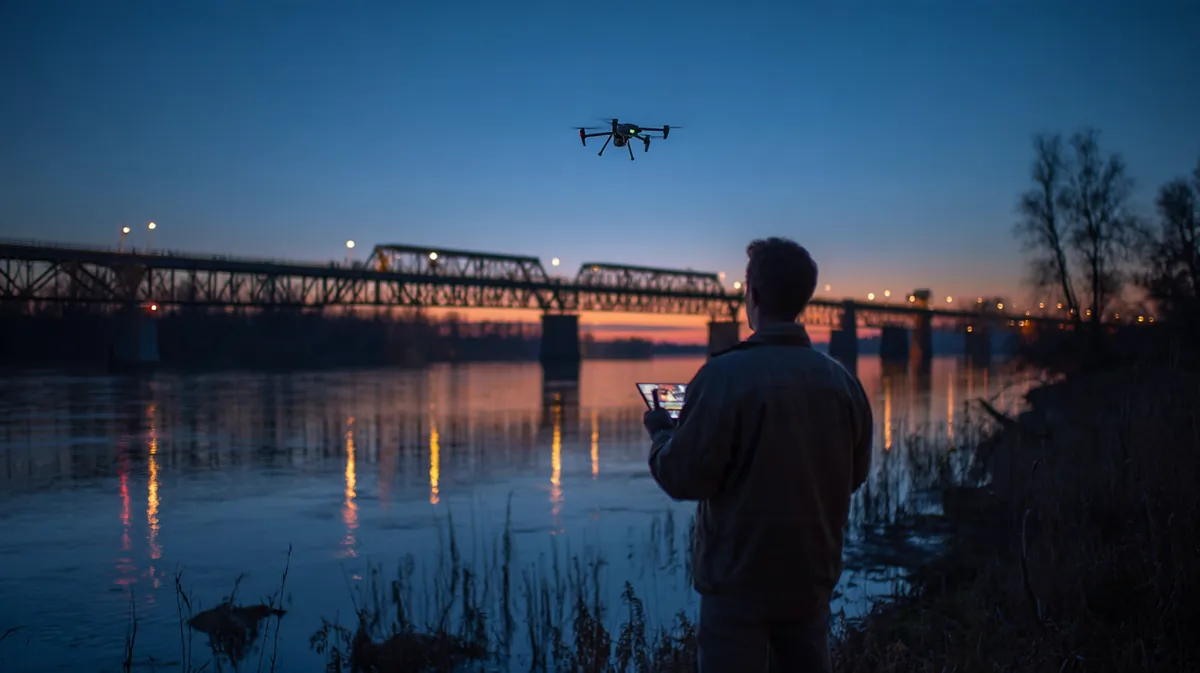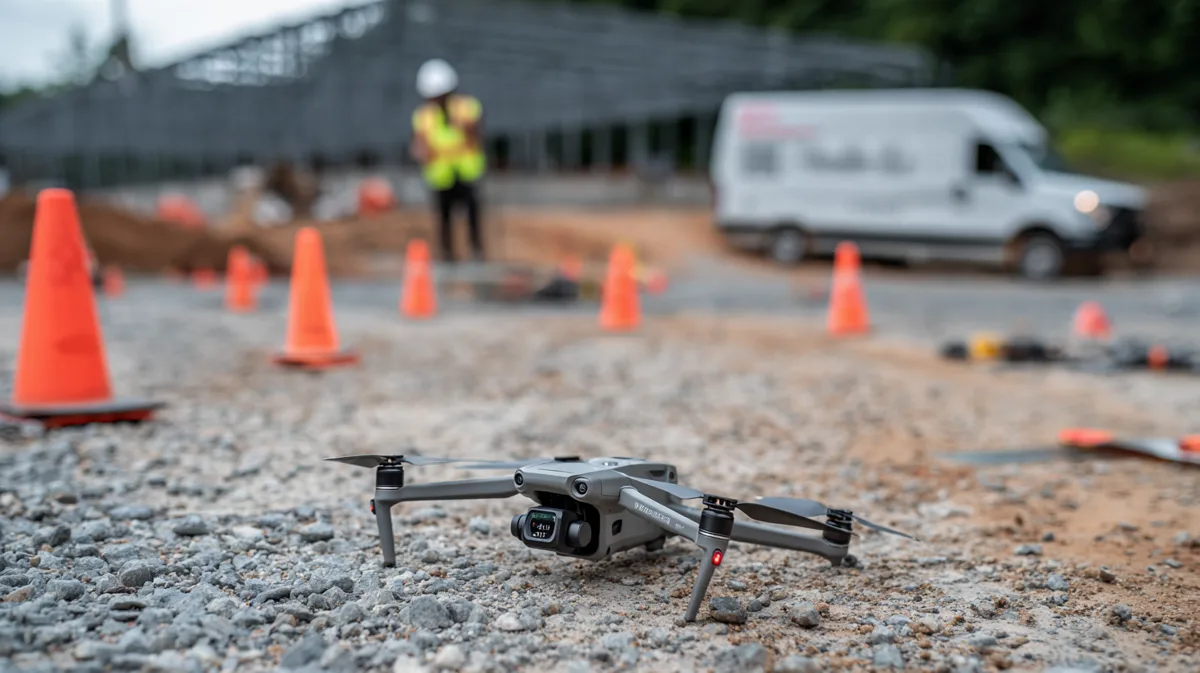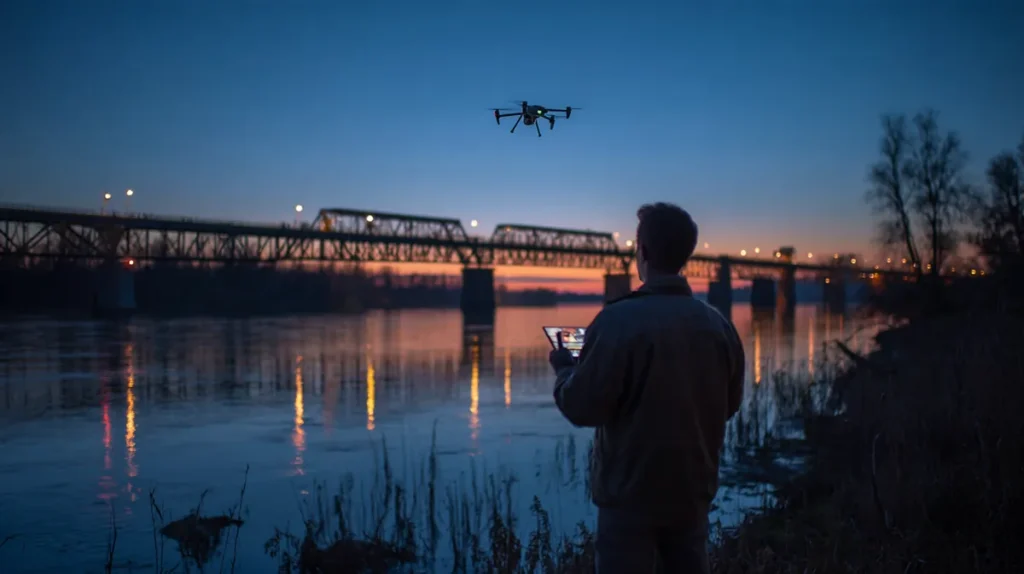
Yes, you can fly a drone at night under Part 107 without a waiver. Part 107 night operations need two things: the remote pilot in command must have passed the initial knowledge test or completed the FAA’s updated training after April 6, 2021, and the drone must show lighted anti-collision lighting visible for at least 3 statute miles with a flash rate sufficient to avoid a collision. The same lighting is required during civil twilight. Every other Part 107 rule, including visual line of sight and airspace authorization, still applies after dark.
This guide explains what counts as night and civil twilight, how to meet the knowledge and lighting requirements, which rules become harder to meet in the dark, how night vision and visual illusions affect remote pilots, and when a waiver is still needed.
What Counts as Night and Civil Twilight Under Part 107?
14 CFR 1.1 defines night as the time between the end of evening civil twilight and the beginning of morning civil twilight, as published in the Air Almanac and converted to local time. Outside Alaska, Section 107.29 treats civil twilight as the 30 minutes before official sunrise and the 30 minutes after official sunset. In Alaska, civil twilight is the period defined in the Air Almanac.
| Period (outside Alaska) | Knowledge requirement | Anti-collision lighting |
|---|---|---|
| Day (sunrise to sunset) | Current Part 107 knowledge under 107.65 | Not required by 107.29; optional |
| Civil twilight (30 minutes before sunrise and after sunset) | Current Part 107 knowledge under 107.65 | Required, visible for at least 3 statute miles |
| Night (end of evening to start of morning civil twilight) | Initial test or training under 107.65 completed after April 6, 2021 | Required, visible for at least 3 statute miles |
Many real jobs cross all three periods. A roof inspection that starts just before sunset, for example, moves from day to civil twilight to night in about half an hour, so plan the lighting and the crew briefing for the darkest part of the flight.
The Two Requirements for Flying at Night
The FAA’s Operations Over People rule, effective April 21, 2021, made routine night operations possible without a waiver. Section 107.29 now rests on two risk mitigations: pilot knowledge and aircraft lighting. Both must be in place before the first night flight.
Requirement 1: Current knowledge that includes night operations
The remote pilot in command must have completed an initial knowledge test or training under Section 107.65 after April 6, 2021. Operation at night is now one of the knowledge areas listed in Section 107.73, and the FAA states that recurrent training taken before April 6, 2021 does not meet the night requirement. Pilots certificated earlier gain night privileges by completing the current free online recurrent training, which covers night physiology and night visual illusions. Our guide to Part 107 recurrent training walks through that course step by step.
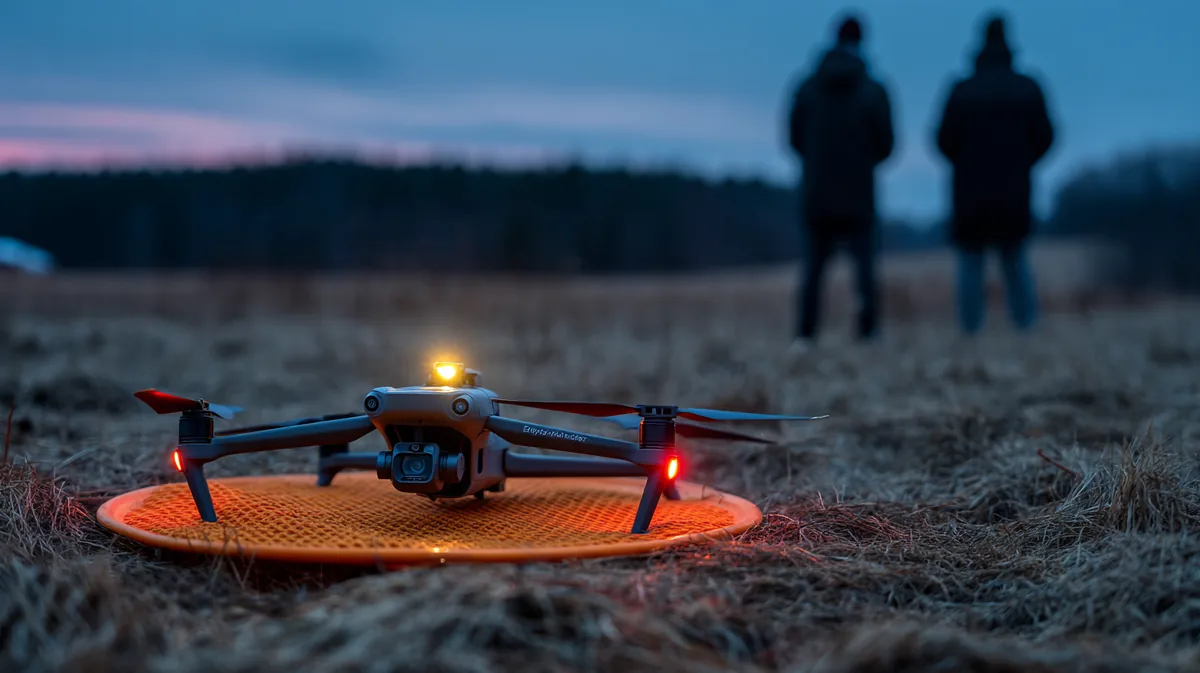
Requirement 2: Anti-collision lighting visible for 3 statute miles
The drone must have lighted anti-collision lighting visible for at least 3 statute miles, with a flash rate sufficient to avoid a collision. Advisory Circular 107-2A says you may rely on the manufacturer’s statement that a light meets the 3-mile standard, but the remote pilot remains responsible for verifying that it works, is visible for 3 statute miles and flashes at a sufficient rate at the operating location. You may reduce the light’s intensity if operating conditions make that safer, for example when a bright strobe close to the pilot makes it hard to judge the aircraft’s position, but you may never turn it off. The exact rule text is in 14 CFR 107.29.
Rules That Still Apply After Dark
Night privileges do not relax any other part of Part 107. Several rules become harder to meet in the dark, so build them into the plan:
- Visual line of sight (107.31). You must still see the aircraft well enough to know its location, attitude, altitude and direction of flight. AC 107-2A warns that you cannot rely solely on the anti-collision light, telemetry displays or both, and that in almost all night cases you may need to restrict the operating area.
- Visual observers (107.33). If you use an observer, the pilot, observer and person on the controls must keep effective communication and jointly scan for hazards. Decide the communication method before the flight.
- Visibility and clouds (107.51). Flight visibility from the control station must be at least 3 statute miles, and at night that means the distance at which prominent lighted objects can be seen and identified. The 500-foot below and 2,000-foot horizontal cloud clearances still apply.
- Controlled airspace (107.41). Class B, C, D and surface Class E areas designated for an airport still require ATC authorization. The FAA says authorizations through FAADroneZone are available for both day and night operations, and LAANC authorization remains an option where available.
- Operations over people (107.39). The categories and their restrictions do not change at night. If the aircraft is eligible for a category, you may fly over people at night under Sections 107.29 and 107.39.
Creative work follows the same rules. If you plan city skylines or event coverage after dark, pair the techniques in our night drone photography guide with the requirements above.
Night Vision and Visual Illusions for Remote Pilots
The human eye works differently in the dark, and the FAA’s Pilot’s Handbook of Aeronautical Knowledge (FAA-H-8083-25, chapter 17) explains why. These effects are the reason the night knowledge requirement exists, and they appear in the Remote Pilot Airman Certification Standards under the physiological aspects of night operation and night illusions.
Dark adaptation takes about 30 minutes
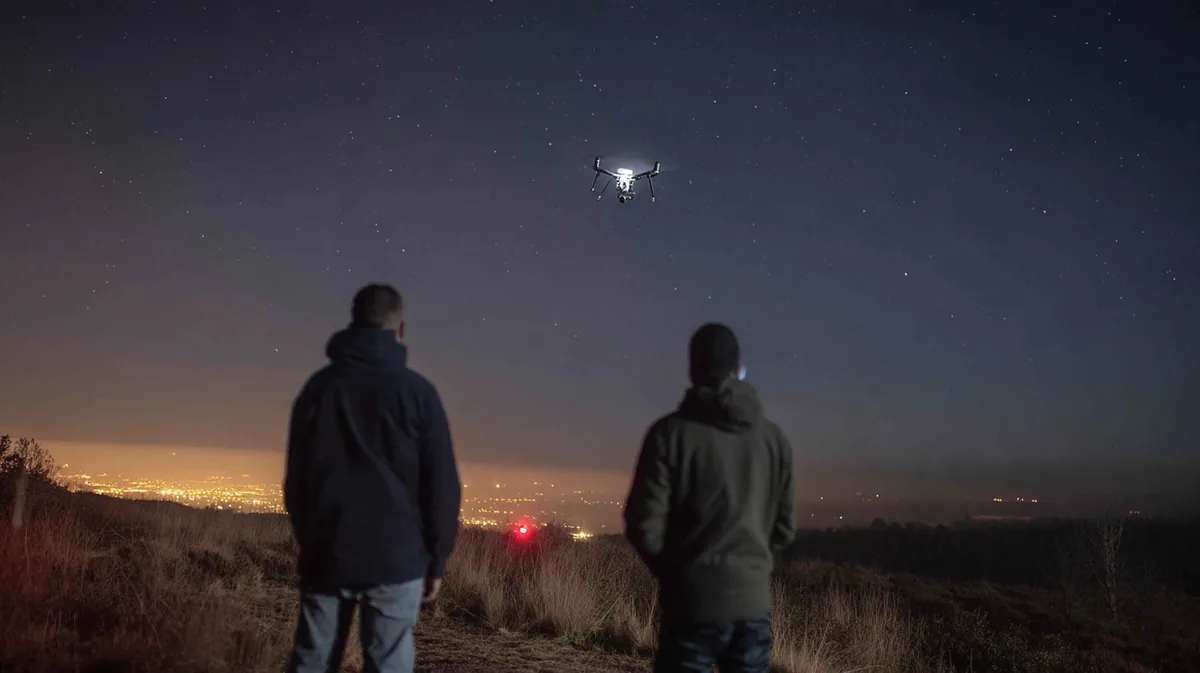
The rods in the eye, which do most of the work at night, can take approximately 30 minutes to fully adapt to darkness, and a bright light can destroy that adaptation in an instant. Arrive early, keep vehicle headlights and work lights away from the crew, and use a dim light for checklists. The handbook also recommends neutral density (N-15) sunglasses in bright sunlight before a scheduled night flight.
Use off-center viewing and a disciplined scan
Cones are concentrated in the center of the eye, which creates a night blind spot. To see a distant light, look about 5 to 10 degrees off center. Scan the sky in sectors of about 30 degrees, overlapping each stop by 10 degrees, and do not hold any stop longer than 2 to 3 seconds, because an image held in off-center vision can fade.
Recognize autokinesis and false horizons
Staring at a single light against a dark background can make it appear to move on its own, an illusion called autokinesis that can begin in about 8 to 10 seconds. A false horizon can form when city lights blend with stars, or when shoreline lights are mistaken for stars over dark water. Keep your eyes moving between the aircraft, the controller and fixed references, and let your observer confirm what you think you see.
A Night Operations Preflight Checklist
Section 107.49 requires a preflight assessment of the operating environment and a crew briefing. For night work, AC 107-2A and its risk assessment guidance point to these additional checks:
- Confirm the remote pilot in command has completed post-April 6, 2021 testing or training and is current under 107.65.
- Confirm sunset, civil twilight and sunrise times for the exact location and date.
- Scout the site in daylight for unlit towers, wires, trees and buildings, and plan around them.
- Check that the anti-collision light works, can be seen for 3 statute miles at this site, and is mounted where it will be visible.
- Account for the light’s power draw; you may need to shorten the planned flight so enough power remains to land normally.
- Check the current and forecast weather, including conditions that could hide the light from other aircraft.
- Obtain any airspace authorization the site requires and brief the crew on roles, communication, lost-link and emergency procedures.
When You Still Need a Waiver at Night
A night waiver is needed only when the operation cannot meet Section 107.29, most often when the aircraft cannot carry lighting visible for 3 statute miles. The lighting rules in 107.29(a)(2) and (b) are among the regulations the FAA can waive under 107.205, and the request must fully describe the operation and show it can be conducted safely. Night waivers issued before April 21, 2021 can no longer be used. Night beyond visual line of sight work also needs a waiver of 107.31. Our step-by-step guide on how to apply for a Part 107 waiver covers the current Aviation Safety Hub process.
Train Your Team for Night Operations
Night flying rewards preparation. Drone Universities has trained drone pilots since 2014, and our Part 107 preparation covers the night operations knowledge area the FAA tests, from lighting rules to night physiology and illusions. New pilots can start with in-person Part 107 test preparation, and agencies and companies can book on-site training anywhere in the United States. To book, request training online or call 1.818.255.0406. The FAA’s Part 107 Airspace Authorizations page lists the current night requirements and authorization options.
Frequently Asked Questions
Do I need a waiver to fly a drone at night under Part 107?
Not in most cases. Since April 21, 2021, you can fly at night without a waiver if you completed the initial test or training after April 6, 2021 and your drone has anti-collision lighting visible for at least 3 statute miles. A waiver is needed only if you cannot meet those conditions.
Does civil twilight count as night?
No. Civil twilight is a separate period, 30 minutes before sunrise and 30 minutes after sunset outside Alaska. You do not need the post-2021 night knowledge for twilight, but you do need anti-collision lighting visible for 3 statute miles.
Can I fly over people at night?
Yes, if the aircraft is eligible for one of the operations over people categories and you meet both the night rules in 107.29 and the category rules. The categories do not change at night.
Is night operations on the Part 107 test?
Yes. Operation at night is a required knowledge area under Section 107.73, including night physiology and night illusions. If you do not pass the FAA Part 107 exam after completing our training, we will either refund your training fee or retrain you at no additional cost.