Drone accident reporting under FAA Part 107 is required within 10 calendar days when a flight causes serious injury to any person, any loss of consciousness, or damage to property other than the drone that costs more than $500 to repair or replace, whichever is lower. Under 14 CFR 107.9, the remote pilot in command files the report, either online through FAADroneZone or by contacting the nearest FAA Flight Standards District Office. Some events, such as a serious injury, a true fly-away or an in-flight fire, also require immediate notification to the National Transportation Safety Board (NTSB) under 49 CFR Part 830, which is a separate obligation.
When Is a Drone Accident Reportable to the FAA?
Section 107.9 sets two thresholds. If an operation meets either one, the remote pilot in command must report it. Crashes that damage only the drone itself do not trigger a Part 107 report.
| Threshold | What it means | FAA report required? |
|---|---|---|
| Serious injury or loss of consciousness | Any person suffers a serious injury, or anyone loses consciousness | Yes, within 10 calendar days |
| Property damage | Damage to property other than the drone, where both the repair cost and the fair market value exceed $500 | Yes, within 10 calendar days |
| Damage to the drone only | The aircraft or parts attached to it are damaged, with no injury and no other property damage | No Part 107 report |
Serious Injury or Loss of Consciousness
FAA Advisory Circular 107-2A explains that a serious injury is one that qualifies as Level 3 or higher on the Abbreviated Injury Scale (AIS). Its example is a person who requires hospitalization but whose injury can fully heal, including head trauma, broken bones or a cut that needs stitches. Any loss of consciousness is reportable on its own, regardless of how minor the injury appears.
Property Damage Over $500
The $500 test uses the lower of the repair cost or the fair market value. The advisory circular gives two examples: if a drone damages property worth $200 and the repair would cost $600, no report is required because the value is below $500; if the drone causes $200 of damage to property worth $600, no report is required because the repair is below $500. The FAA’s Aeronautical Information Manual adds that property damage means property that is not part of the drone system or attached to it.
What to Do Immediately After a Drone Crash
The minutes after a crash set up everything that follows, including an accurate report. A calm, rehearsed sequence protects people first and preserves the facts you will need later.
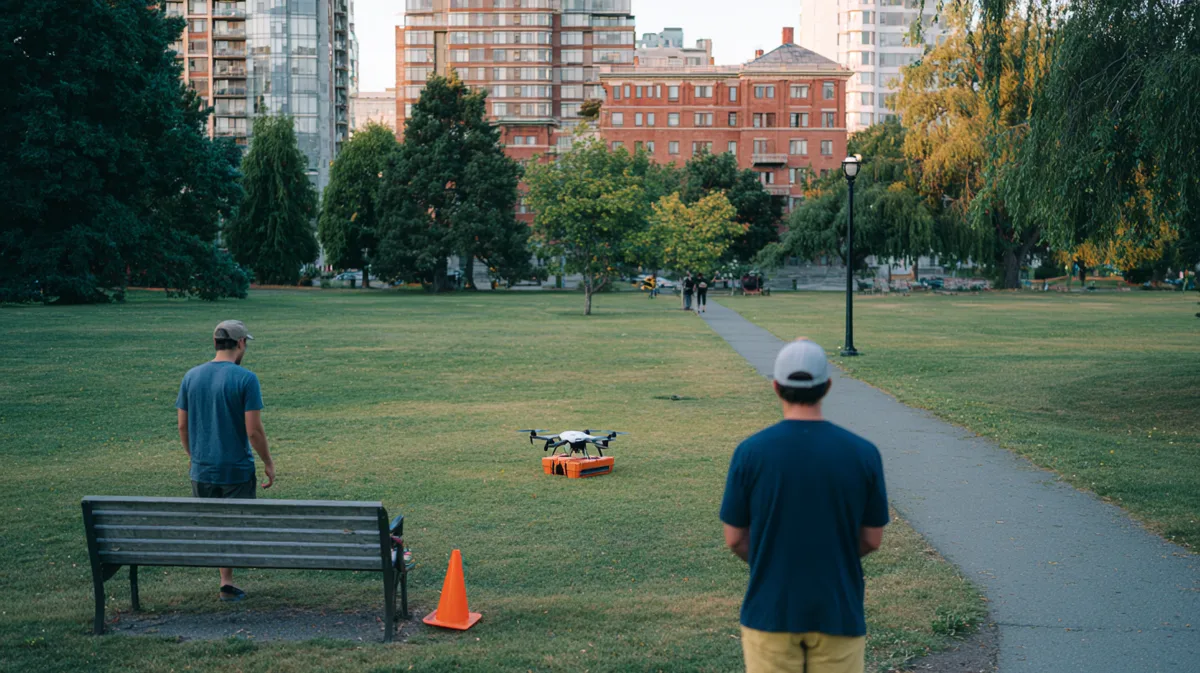
- Help anyone who is hurt. Call emergency services if needed. Human safety comes before the aircraft or the report.
- Make the scene safe. Disconnect or isolate damaged batteries where it is safe to do so, and keep bystanders away from wreckage.
- Do not move wreckage unless necessary. If NTSB notification applies, 49 CFR 830.10 says wreckage may be moved only to remove injured or trapped people, protect it from further damage or protect the public.
- Photograph and record. Take photos of the scene, the aircraft, any damaged property and impact marks before anything is moved, and note the time, location and weather.
- Save the flight data. Export the flight log and telemetry from the controller and app, and keep the aircraft, batteries and memory cards.
- Do not fly again until the system is checked. Section 107.15 prohibits operating a drone that is not in a condition for safe operation and requires a check before each flight.
If a law enforcement officer, FAA inspector or NTSB representative asks, Section 107.7 requires you to present your remote pilot certificate and identification.
How to File a Part 107 Accident Report
The FAA accepts Part 107 accident reports through FAADroneZone, and reports may also be made by contacting the nearest Flight Standards District Office (FSDO). Advisory Circular 107-2A also describes reporting by telephone to an FAA Regional Operations Center. The FAA’s own accident reporting FAQ summarizes the same thresholds.
- Confirm the threshold using the table above. If in doubt, report.
- Note the deadline. Count 10 calendar days from the operation that caused the injury or damage.
- Sign in to FAADroneZone and open the Part 107 accident reporting service, or call your FSDO.
- Enter the required details listed below, keeping the description factual.
- Save the confirmation. FAADroneZone generates a unique accident report reference number; keep it with your records.
Advisory Circular 107-2A says the report should include:
- The remote pilot in command’s name and contact information.
- The remote pilot’s FAA airman certificate number.
- The drone’s FAA registration number.
- The location, date and local time of the accident.
- Whether any serious injury or fatality occurred.
- The property damaged and the extent of damage, if known.
- A description of what happened.
Write the description in plain, factual terms: what the flight was for, what happened and in what order, and what you did in response. Avoid guessing at causes you have not confirmed.
When You Must Also Notify the NTSB
The NTSB rules in 49 CFR Part 830 apply to civil and certain public aircraft, including drones, and they work differently from Part 107. Instead of a 10-day window, Section 830.5 requires the operator to notify the NTSB immediately and by the most expeditious means available.
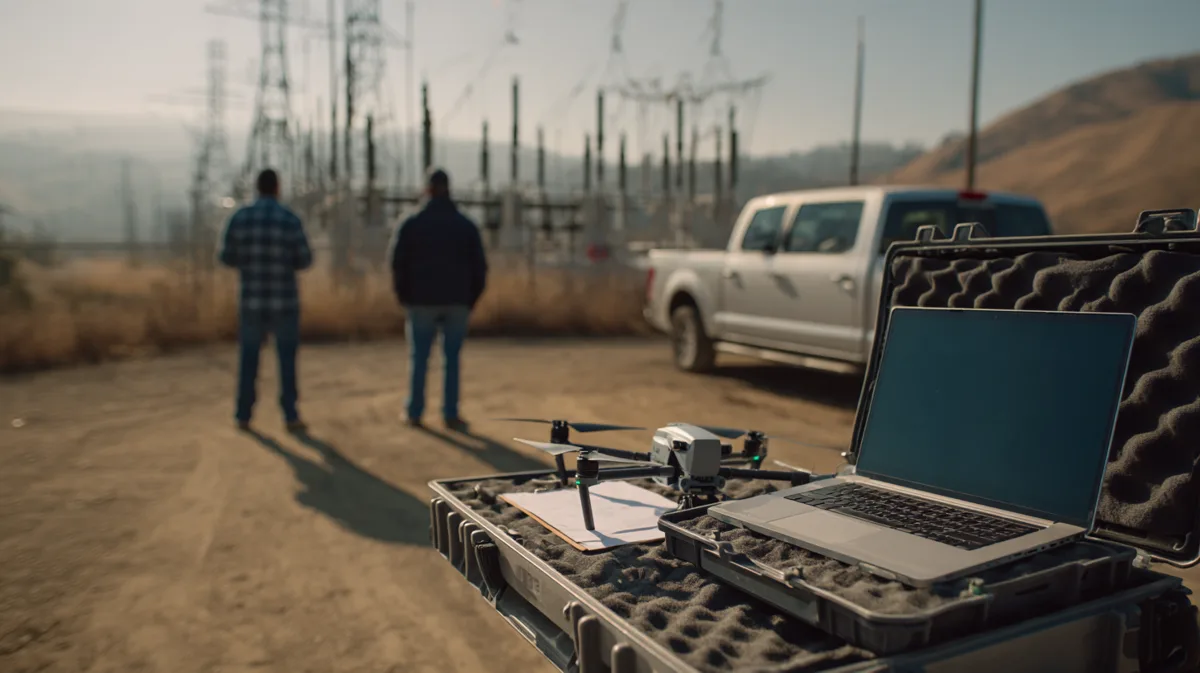
Under Section 830.2, an unmanned aircraft accident occurs when any person suffers death or serious injury, or when a drone that holds an airworthiness certificate sustains substantial damage. Note that the NTSB defines serious injury differently from the FAA advisory circular, for example hospitalization for more than 48 hours or a fracture of any bone other than simple fractures of fingers, toes or nose.
Notification is also required for listed serious incidents, even when no one is hurt. The NTSB advisory to drone operators lists the events that apply to all drones:
- Flight control system malfunction or failure. A true fly-away qualifies; a lost link that behaves as expected does not.
- Inability of a required crewmember, such as the remote pilot or a required visual observer, to perform normal duties because of injury or illness.
- In-flight fire, which the NTSB expects to be generally associated with batteries.
- A collision in flight.
- Damage to property other than the aircraft estimated to exceed $25,000.
- Release of all or part of a propeller blade, other than from ground contact alone.
- An overdue aircraft believed to have been involved in an accident.
The footnote to Section 830.5 lists the NTSB Response Operations Center at 844-373-9922 or 202-314-6290. After an accident, Section 830.15 requires the operator to file NTSB Form 6120.1 within 10 days, and Section 830.10 requires the operator to preserve wreckage and records until the NTSB releases them.
Recreational, Part 91 and Public Agency Operations
Reporting depends on the rules you fly under. Recreational flyers fully complying with 49 U.S.C. 44809 are not required to report crashes to the FAA, although the Aeronautical Information Manual encourages all drone flyers to follow the NTSB requirements. Part 91 operators, typically public aircraft operators and civil operators flying type-certificated aircraft, must follow the specific reporting terms in their Certificate of Waiver or Authorization. Police, fire and other agencies should confirm which rule set applies to each flight and write that into their procedures.
Building an Accident Response Plan for Your Team
A written drone accident reporting plan helps organizations that fly several aircraft handle every event the same way. A practical plan covers:
- Who is responsible for each report, and how the remote pilot in command notifies the program manager.
- A one-page decision guide for the FAA thresholds and the NTSB events.
- Contact details for the local FSDO and the NTSB Response Operations Center.
- A standard method for exporting flight logs and photographing the scene.
- Rules for grounding and inspecting an aircraft before it returns to service.
- Notifying your insurance carrier, as your policy requires.
Our guide to drone safety protocols for commercial operations covers the preflight and risk management side, and our overview of drone insurance coverage options explains what to check in a policy.
Common Drone Accident Reporting Mistakes
- Missing the 10-day window while waiting for a repair estimate. The deadline runs from the date of the operation.
- Assuming the NTSB does not apply because no one was hurt. A true fly-away or a battery fire is a reportable incident.
- Counting damage to the drone toward the $500 threshold. Only other property counts.
- Clearing the scene too early and losing photos, logs or wreckage needed later.
- Returning the aircraft to service without an inspection.
Training That Prepares Pilots for the Unexpected
Accident reporting is part of the FAA Remote Pilot knowledge test, and knowing the rules before an event is far easier than learning them after one. Drone Universities has trained pilots since 2014, and our FAA Certified Flight Instructors travel to clients anywhere in the United States for one-on-one and group training. New pilots can start with our in-person Part 107 test preparation, and organizations can build incident procedures into corporate drone training at their own site. To book a session, request training online or call 1.818.255.0406.
Frequently Asked Questions
How long do I have to report a drone accident to the FAA?
Under 14 CFR 107.9, a remote pilot in command must report a qualifying accident no later than 10 calendar days after the operation. NTSB notification, when required, must be made immediately.
Do I have to report a drone crash if only the drone is damaged?
Not to the FAA under Part 107, because damage to the drone itself does not count. You may still need to notify the NTSB if the crash involved a listed event such as a flight control failure or an in-flight fire.
Who is responsible for filing the report?
Part 107 places the duty on the remote pilot in command. For the NTSB, Part 830 places it on the operator, meaning the person or organization that causes or authorizes the flight.
Can I report a drone accident by phone?
Yes. Besides FAADroneZone, the FAA accepts reports made by contacting the nearest Flight Standards District Office, and Advisory Circular 107-2A also describes telephone reports to FAA Regional Operations Centers.