Drone operations over people are allowed under FAA Part 107 only in specific situations. Under 14 CFR 107.39, you may fly a small drone over a person only if that person is directly participating in the operation, is under a covered structure or inside a stationary vehicle that offers reasonable protection, or if the flight meets one of the four operational categories in Part 107 Subpart D. Each category sets its own aircraft requirements, and sustained flight over crowds carries extra limits. Any other flight over people requires an FAA waiver.
These rules come from the FAA’s Operations Over People rule, which took effect on April 21, 2021.
What Counts as Flying Over People?
The FAA defines “over” as flight directly over any part of a person. Hovering above someone’s head, shoulders or outstretched arms counts, and duration does not matter: any flight over any part of a person, however brief, is an operation over people.
Section 107.39 allows it in three cases:
- Direct participants. The FAA’s guidance in Advisory Circular 107-2A lists the remote pilot in command, a person manipulating the controls, a visual observer and other crewmembers necessary for the safety of the operation. A client, homeowner, site worker or event guest is not a direct participant simply because they are nearby or on camera.
- People under safe cover. A person under a covered structure or inside a stationary vehicle that can provide reasonable protection from a falling drone.
- Category operations. The flight meets the requirements of Category 1, 2, 3 or 4.
The Four Categories of Operations Over People
The categories are based on the risk a drone presents to people on the ground: Category 1 depends on weight and design, Categories 2 and 3 on FAA-accepted impact performance, and Category 4 on an airworthiness certificate.
| Category | Aircraft requirement | Key operating limits |
|---|---|---|
| Category 1 | 0.55 pounds (250 grams) or less including everything on board or attached, for the whole flight; no exposed rotating parts that would lacerate skin | Sustained flight over open-air assemblies only with Remote ID |
| Category 2 | Listed on an FAA-accepted declaration of compliance and labeled for Category 2; impact injury below the severity of an 11 foot-pound transfer from a rigid object; no exposed lacerating parts; no safety defects | Sustained flight over open-air assemblies only with Remote ID |
| Category 3 | Listed on an FAA-accepted declaration of compliance and labeled for Category 3; impact injury below the severity of a 25 foot-pound transfer; no exposed lacerating parts; no safety defects | Never over open-air assemblies; over people only on a closed- or restricted-access site with everyone on notice, or without sustained flight over non-participants |
| Category 4 | Airworthiness certificate issued under 14 CFR Part 21 | Operate within the approved Flight Manual limitations; Remote ID for sustained flight over open-air assemblies; maintenance and records requirements apply |
Category 1: Small, Lightweight Aircraft
Category 1 needs no declaration of compliance and no label. Instead, the remote pilot is responsible for confirming before each flight that the aircraft, with everything attached, weighs 0.55 pounds or less and has no exposed rotating parts that would lacerate human skin. Weight alone is not enough, and adding an accessory can push an aircraft over the limit.
Category 2: Low Impact Energy
A Category 2 drone must be listed on an FAA-accepted declaration of compliance and labeled as eligible. The manufacturer’s remote pilot operating instructions describe the eligible configuration and acceptable modifications.
Category 3: Higher Impact Energy With Site Limits
Category 3 allows a higher impact threshold but adds operating restrictions. It never permits flight over an open-air assembly, and outside a closed- or restricted-access site the drone may only pass briefly over non-participants who are not under safe cover, without sustained flight.
Category 4: Airworthiness-Certificated Drones
Category 4 covers drones issued an airworthiness certificate under Part 21. The FAA-approved Flight Manual limitations must not prohibit operations over people, and specific maintenance and recordkeeping rules apply.
How to Confirm Eligibility
For Categories 2 and 3, check the FAA’s UAS Declaration of Compliance system and the label on the aircraft. If the label is damaged or missing, Section 107.135 requires the remote pilot to relabel the aircraft before flying over people. Never assume a model is eligible because it is small or popular.
Sustained Flight and Open-Air Assemblies
The strictest limits apply to open-air assemblies, which the FAA judges case by case. Its examples include sporting events, concerts, parades, protests, political rallies, community festivals, and parks or beaches during certain events. Small groups relaxing in a park might not qualify.
Sustained flight over an assembly includes hovering above it, flying back and forth over it, or circling so that the drone stays above part of the crowd. It does not include a brief, one-time transit over part of the gathering that is incidental to a point-to-point flight unrelated to the assembly.
For Categories 1, 2 and 4, sustained flight over an open-air assembly is allowed only if the drone meets the Standard Remote ID or broadcast module requirements. Flying inside an FAA-Recognized Identification Area does not satisfy this condition. Our guide to drone Remote ID requirements explains how to comply. Category 3 drones may not fly over open-air assemblies at all.
Planning a Job With People on the Ground
Under the FAA’s guidance, the remote pilot must consider the drone’s course, speed and trajectory, including the possibility of a failure, to decide whether it could pass over or strike someone who is not part of the operation. If the requirements cannot be met, the flight must not take place or must be ended immediately and safely.
A practical planning routine:
- Confirm the aircraft’s category and, for Categories 2 and 3, its declaration of compliance listing and label.
- Choose the operating area. Advisory Circular 107-2A suggests a location where no people are expected, a safe distance from non-participants, or asking people to stay indoors or under safe cover.
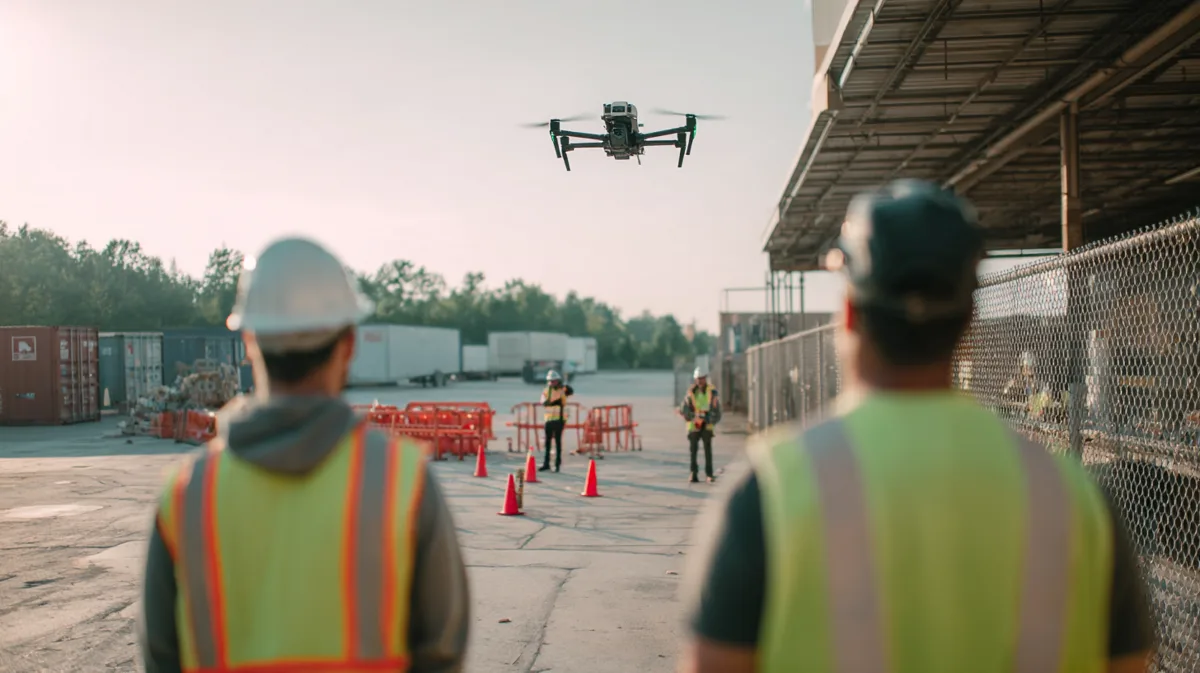
- Secure the site if you rely on restricted access. The FAA notes that barricades, fencing, monitoring personnel or natural boundaries such as rivers and cliffs can prevent unauthorized entry. Everyone working on the site must be on notice that a drone may fly over them.
- Brief direct participants on their roles and on what to do if the drone malfunctions.
- Plan takeoff, landing and return-to-home routes that avoid people and roads, and land if someone enters the area.
These steps also support Section 107.19, which requires that the drone pose no undue hazard to people or property if control is lost, and Section 107.23, which prohibits careless or reckless operation.
Operations Over Moving Vehicles
Section 107.145 applies the same framework to people inside moving vehicles. Under Category 1, 2 or 3, the drone must either stay within or over a closed- or restricted-access site where everyone inside a moving vehicle is on notice, or must not maintain sustained flight over moving vehicles. A Category 4 drone may fly over moving vehicles if its approved operating limitations allow it.
Flying from a moving vehicle is a separate rule. Unless the FAA grants a waiver, Section 107.25 prohibits operating from a moving aircraft and allows operating from a moving land or water vehicle only over a sparsely populated area and when the drone is not carrying another person’s property for hire.
When You Need a Part 107 Waiver
If you need to fly over people who are not participating or under safe cover, and your aircraft or operation cannot meet a category’s conditions, you need a certificate of waiver. Section 107.205 lists both Section 107.39 (operation over human beings) and Section 107.145 (operations over moving vehicles) as waivable.
Applications are submitted through the FAA’s Aviation Safety Hub and must describe the operation, its risks and your mitigations. The FAA aims to decide requests within 90 days; its Part 107 waivers page explains the process.
How Operations Over People Apply Across Industries
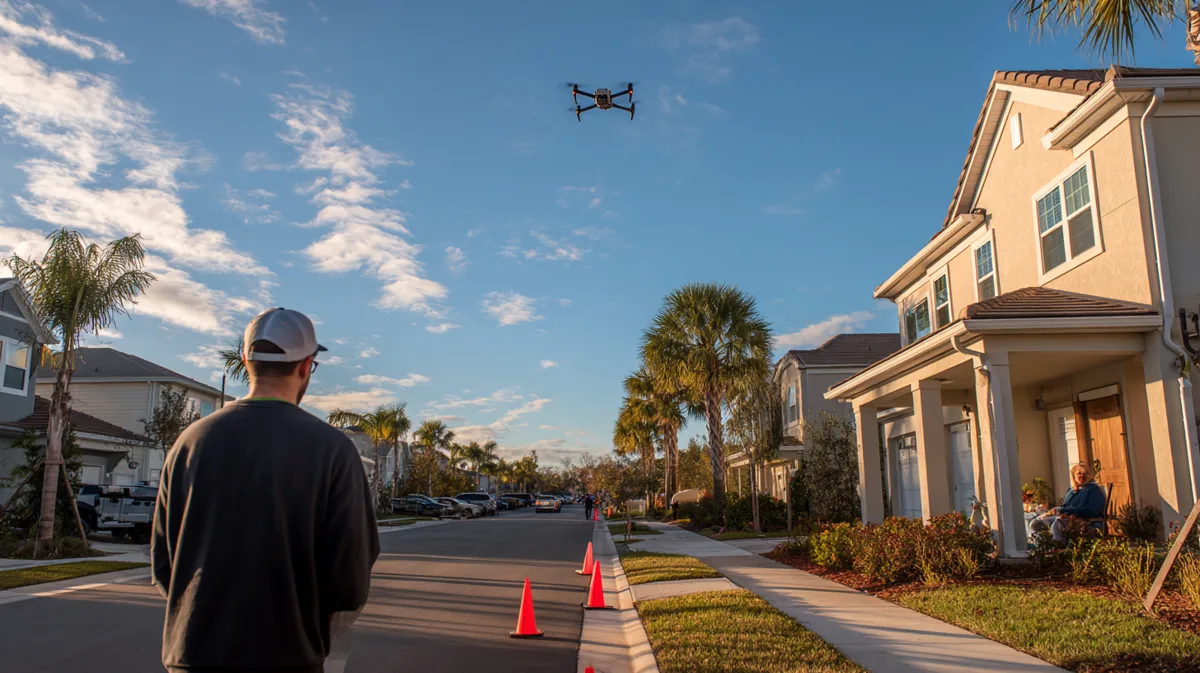
- Real estate. Neighbors, homeowners and passers-by are not direct participants, so plan launch points and flight paths to keep clear of them.
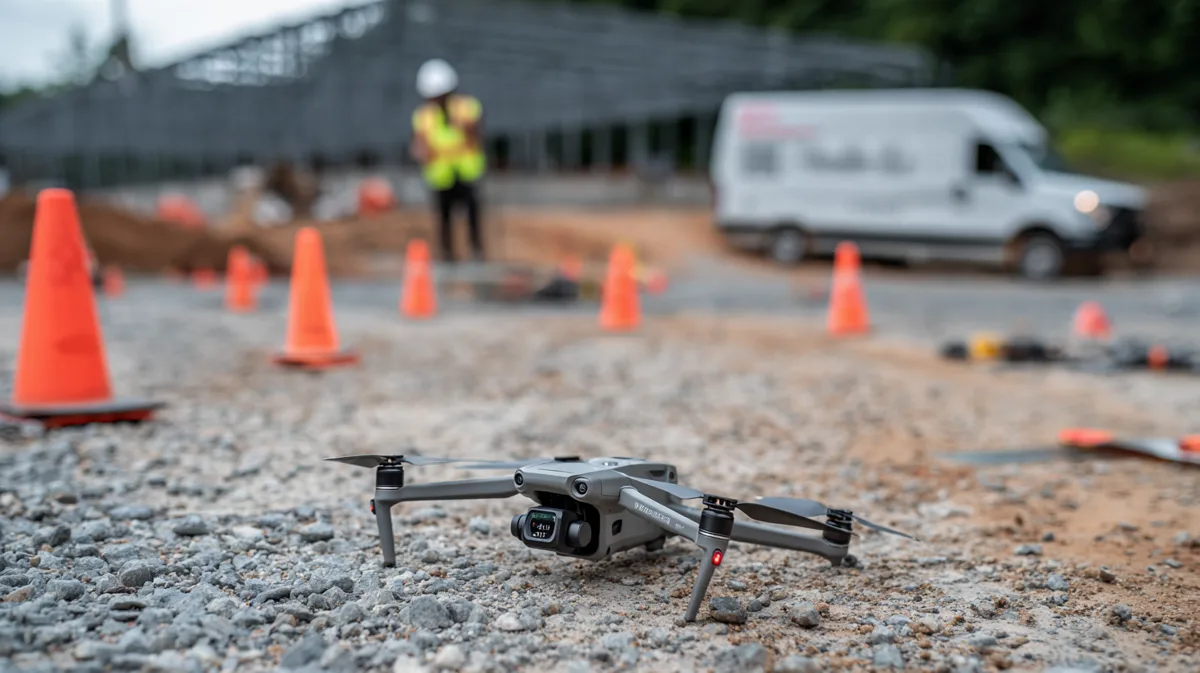
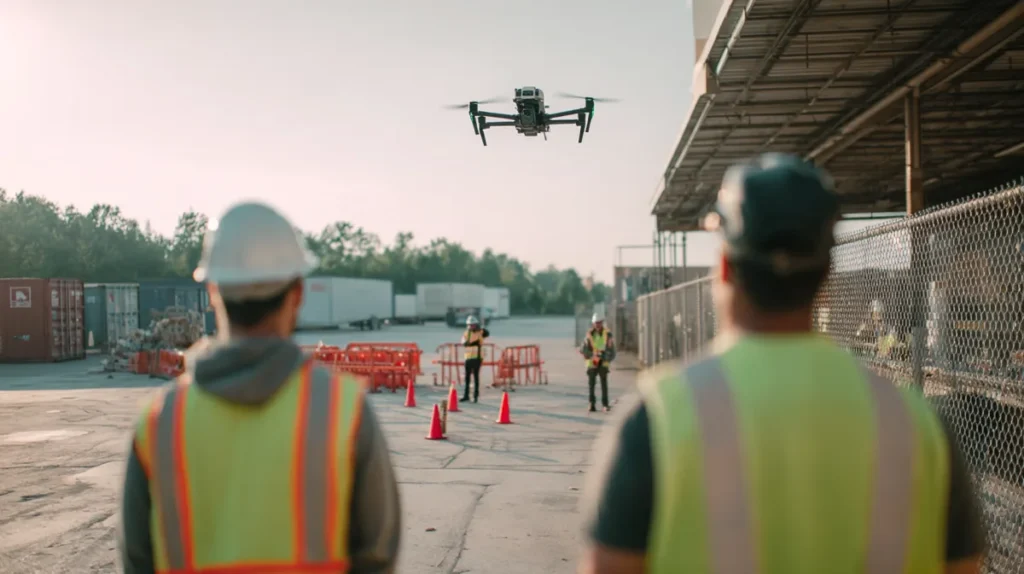
- Construction and inspection. Site crews are covered by the rule unless they are part of the operation or under safe cover. A restricted-access site can support Category 3 work with an eligible aircraft.
- Film and events. Spectators may form an open-air assembly, which brings the Remote ID condition for sustained flight and rules out Category 3.
- Public safety. Scenes often include bystanders and moving traffic, so agencies should build these rules into their procedures. See our police drone training programs.
Common Drone Operations Over People Mistakes
- Treating clients or bystanders as participants. Only people whose involvement is necessary for the safety of the flight count.
- Forgetting the Remote ID link. Sustained flight over an open-air assembly under Categories 1, 2 and 4 requires Remote ID compliance.
- Adding accessories to a Category 1 aircraft without rechecking the 0.55-pound limit.
- Not checking the declaration of compliance before using a drone for Category 2 or 3 operations.
Training Your Pilots and Crews
Operations over people is easiest to manage as a written procedure: confirm aircraft eligibility, secure the site, brief participants and set a clear stop rule.
Drone Universities has trained pilots since 2014. Our FAA Certified Flight Instructors travel to clients anywhere in the United States and teach one-on-one or in groups. Individuals preparing for the FAA knowledge test can start with our in-person Part 107 test preparation, and businesses can arrange corporate drone training so every crew member follows the same site procedures. To book a session, request training online or call 1.818.255.0406.
Frequently Asked Questions
Can I fly a drone over people under Part 107?
Yes, within the limits of Section 107.39 and the four categories; otherwise you need a waiver. The FAA’s Operations Over People overview summarizes each category.
Does a drone under 250 grams automatically qualify for Category 1?
No. The aircraft must weigh 0.55 pounds (250 grams) or less with everything attached, and it must have no exposed rotating parts that would lacerate human skin. The remote pilot is responsible for confirming both.
Do these rules apply to recreational flyers?
The categories are part of Part 107. The FAA states that the recreational flyer statute, 49 U.S.C. 44809, does not permit operations over people or moving vehicles, and that no FAA-recognized community-based organization’s safety guidelines currently permit recreational flights over crowds.
Is operations over people on the Part 107 knowledge test?
Yes. The FAA’s Airman Certification Standards for remote pilots include Operations Over People as its own task, covering the categories, moving vehicles, closed- and restricted-access sites and declarations of compliance. Our in-person preparation follows the FAA’s published knowledge areas. If you do not pass the FAA Part 107 exam after completing our training, we will either refund your training fee or retrain you at no additional cost.