Drone Training for Organizations: Who We Train
One training partner for every team that flies. Drone Universities sends FAA Certified Flight Instructors to your site, anywhere in the United States, to train fire crews, officers, agency staff, faculty, teachers and company pilots on the rules and aircraft they actually use.
Drone Universities Courses
5.00 (20K+ Joined)
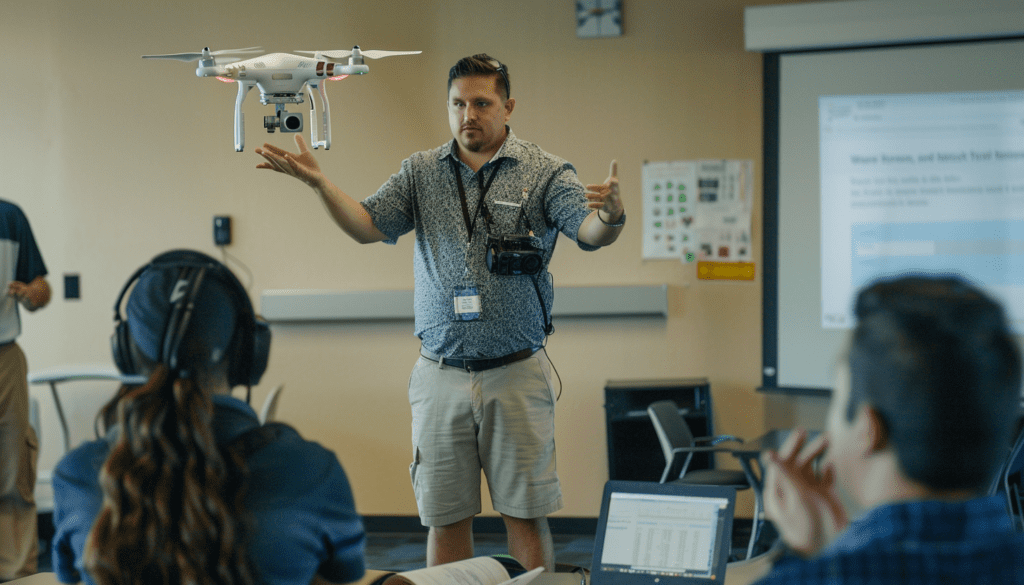
FAA Part 107 Training
Prepare yourself for the FAA Part 107 Knowledge Test. Learn to fly, how to understand industry-standard flight systems, and most importantly, safe and legal flying practices. If you do not pass the FAA Part 107 exam after completing our training, we will either refund your training fee or retrain you at no additional cost.
DJI Mini 4K included!
Duration
$2,500
4.79 (5.4K Joined)
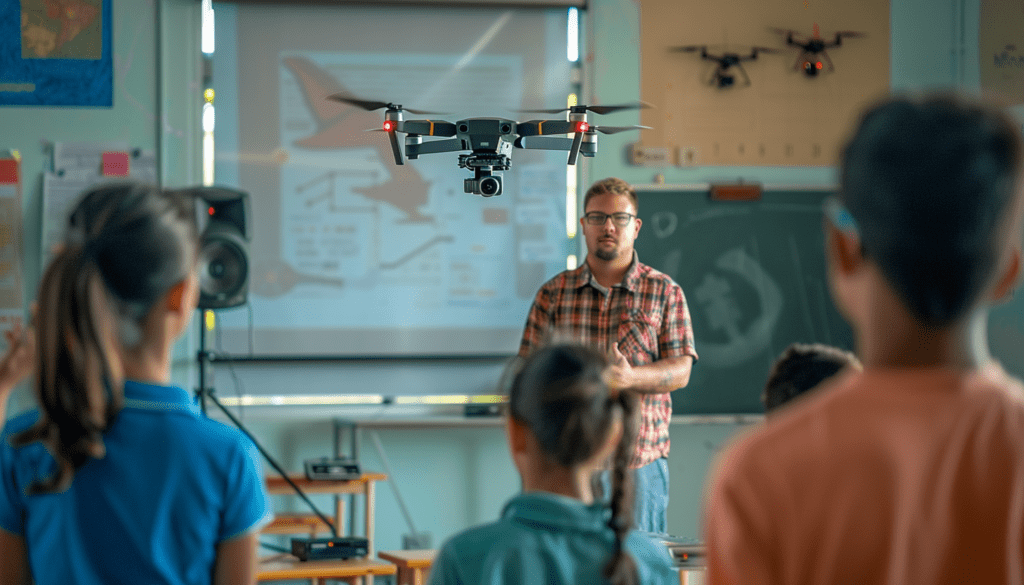
Advanced Aerial Inspections and Cinematography
This one-day course teaches you advanced aerial photography and videography. All classes are taught by working professionals. Learn what it takes to get great shots for clients like Discovery Channel and National Geographic.
Duration
$1,000
4.96 (2.6K Joined)
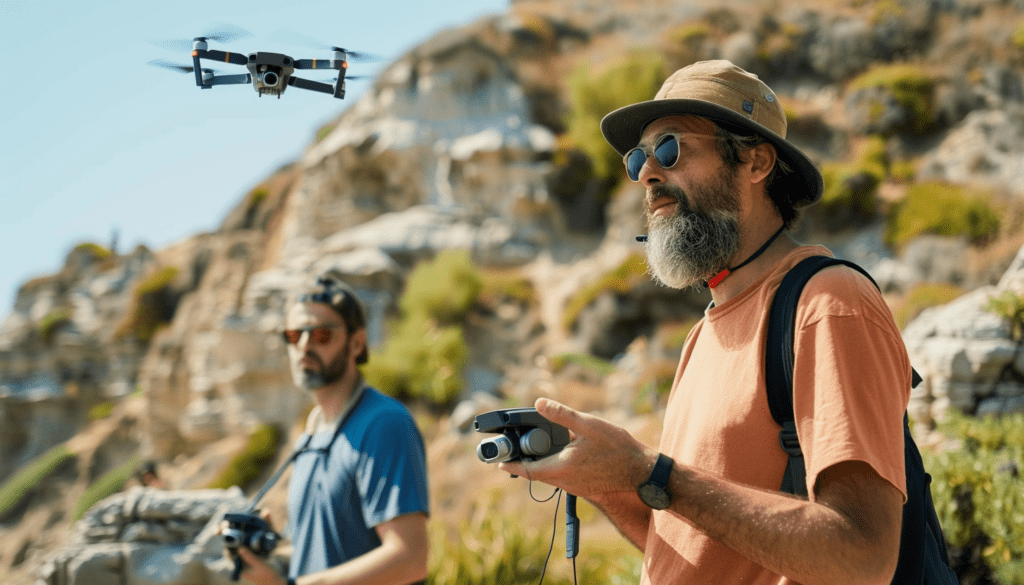
This one-day course teaches you all about GIS. You will learn everything you need to successfully collect usable data on your flights. We’ll guide you through planning and flying successful operations, programing flight patterns.
Duration
$1,000
4.87 (1.6K+ Joined)
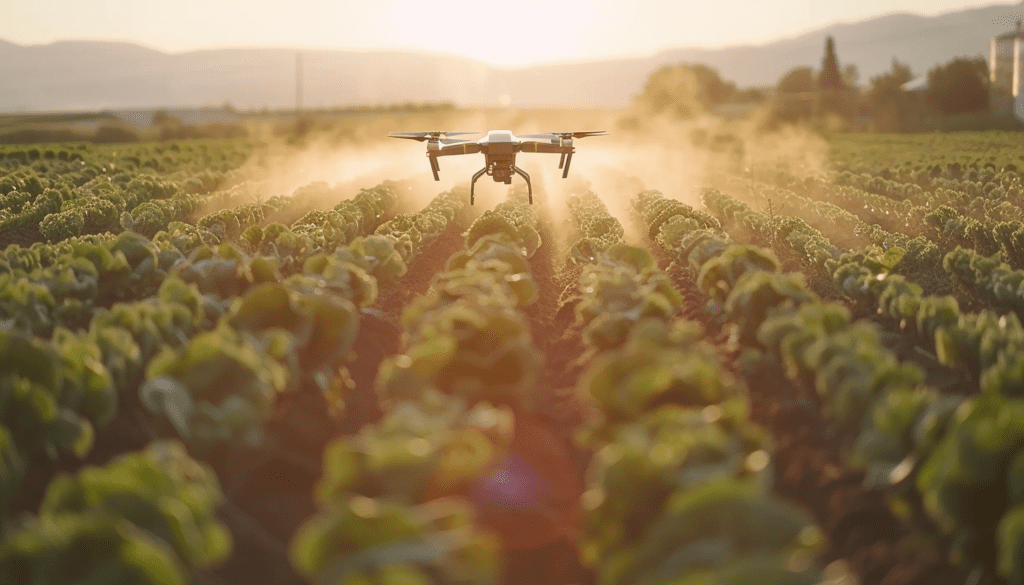
Drones in Agriculture
Join Drone Universities’ one-day Drones in Agriculture course. Learn precision flights, multispectral imaging, and field methodology to boost crop yield. Sign up now!
Duration
$1,000
4.92 (3.6K Joined)
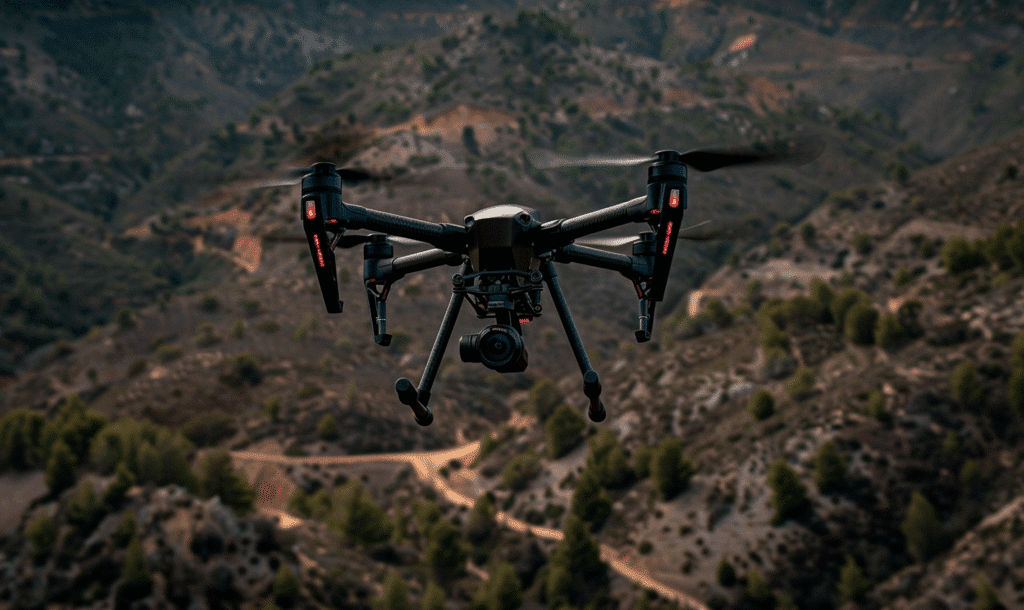
Drones for Construction and Inspection
Join Drone Universities’ one-day Drones for Construction and Inspection course. Learn drone mapping to reduce errors, save costs, and improve safety in construction and wildfire tracking.
Duration
$1,000
4.82 (2.6K Joined)
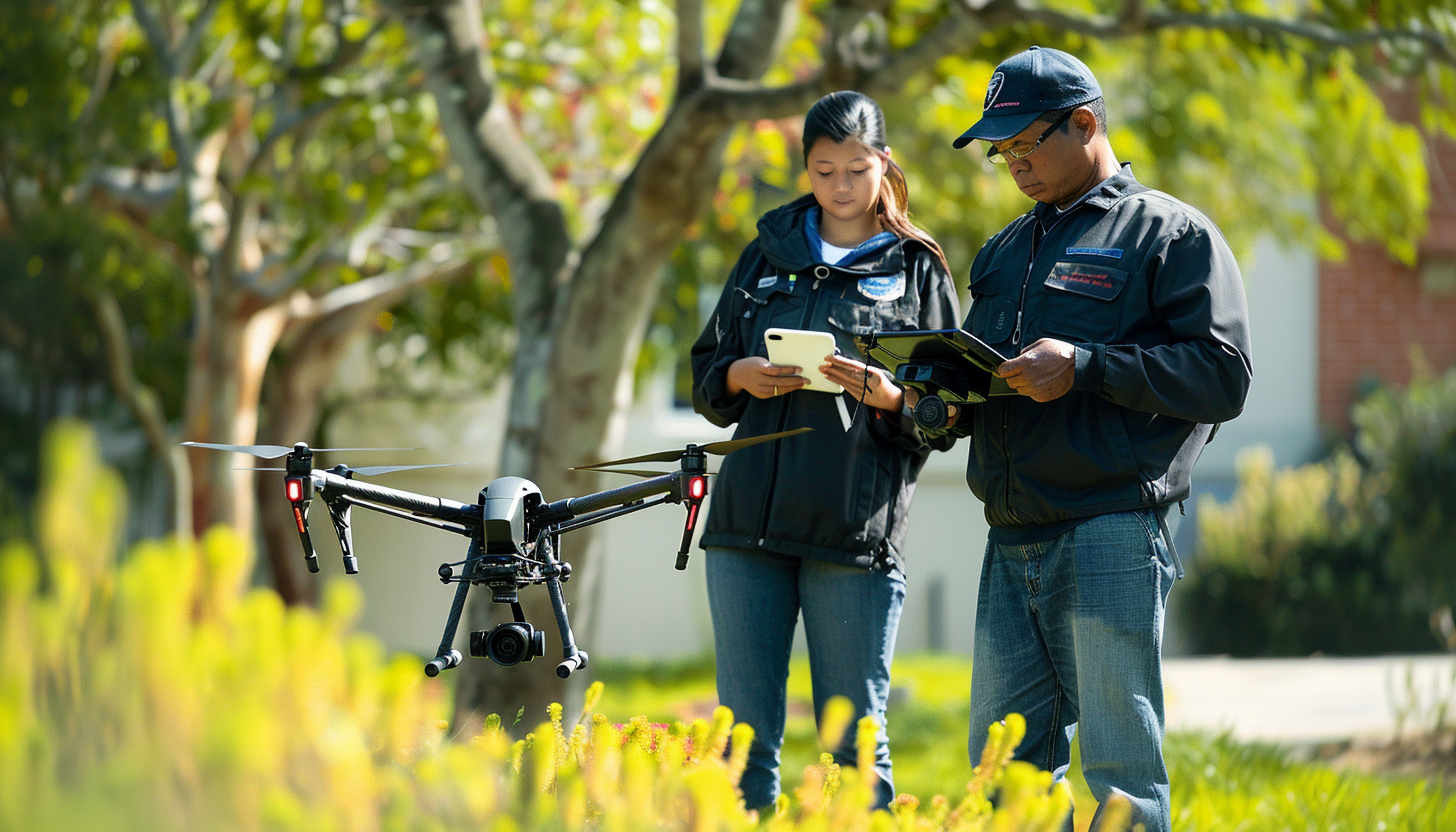
Drones for Public Safety and Transportation
Learn to use drones for infrastructure inspection and planning. Our one-day course improves public safety and transportation by saving time, money, and resources.
Duration
$1,000
4.82 (3.7K+ Joined)
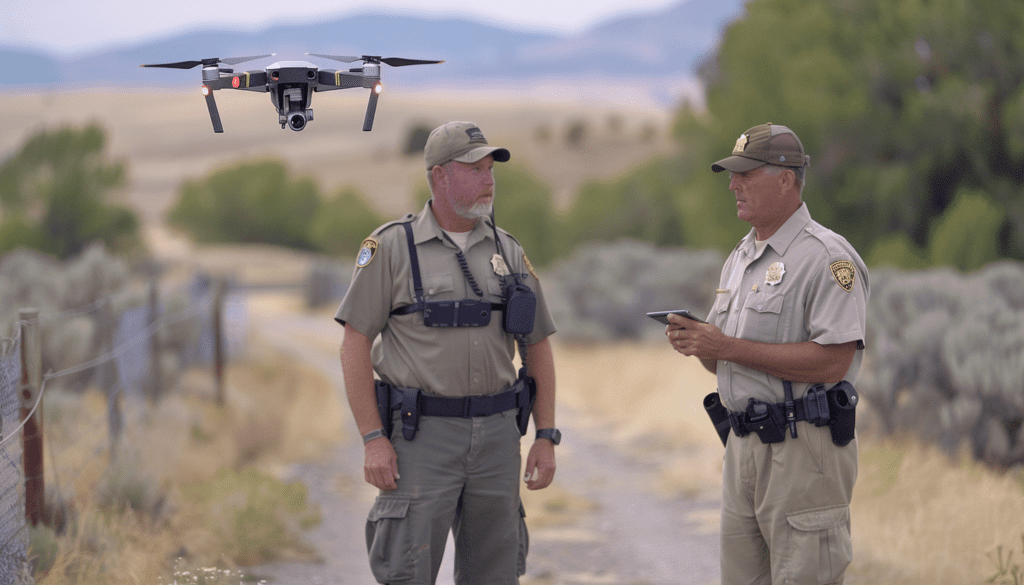
Drones in Law Enforcement
Join our one-day Drones in Law Enforcement course to learn tactical drone use for surveillance, accident investigation, and evidence collection. Enhance situational awareness and improve crime scene documentation. Sign up now!
Duration
$1,000
4.89 (3.8K Joined)
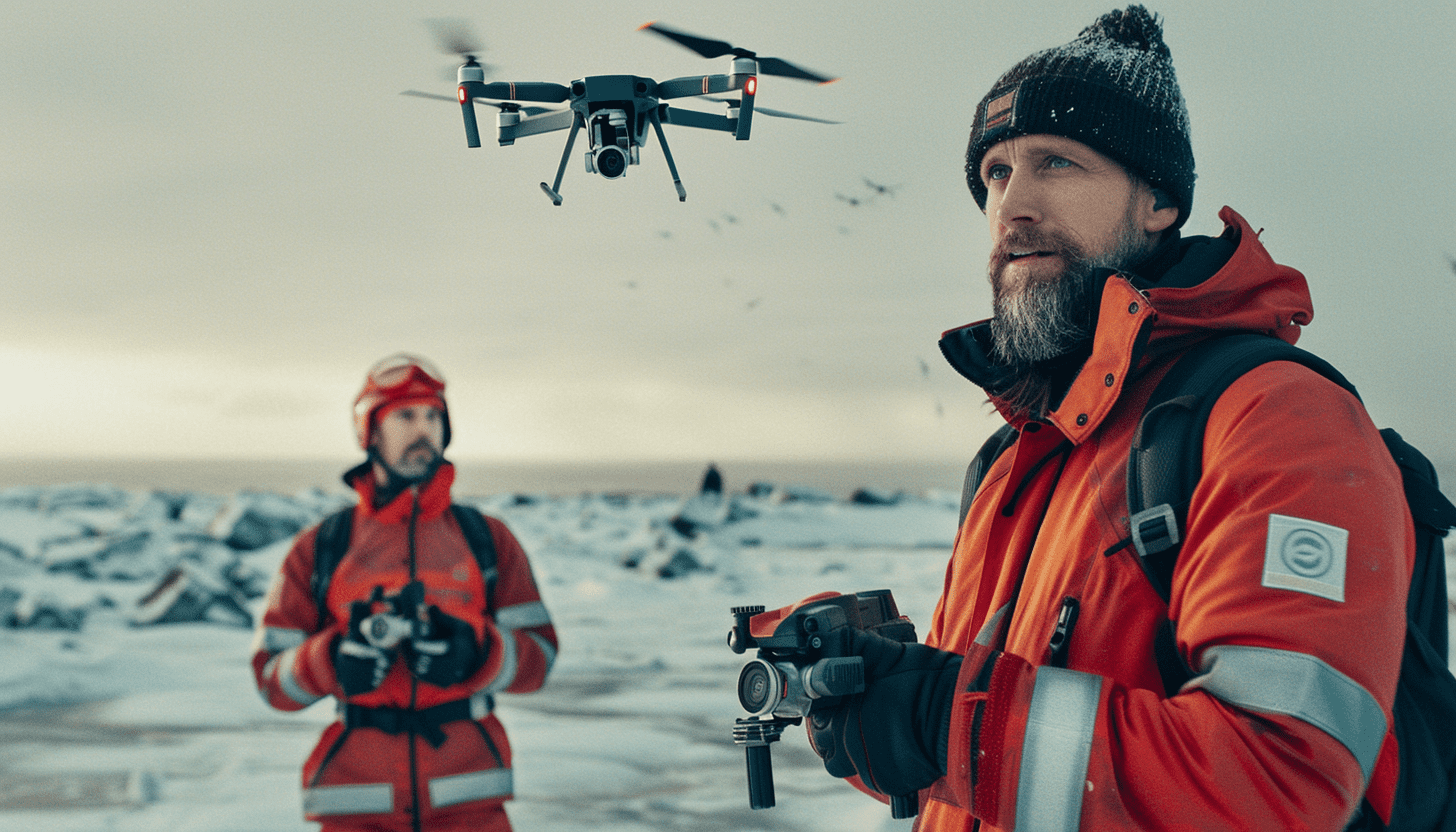
Drones for Search and Rescue
Join our one-day Drones for Search and Rescue course to learn efficient search techniques and night operations. Enhance your ability to quickly locate and save lost or injured individuals. Sign up now!
Duration
$1,000
Who does Drone Universities train?
Drone Universities trains fire departments, law enforcement agencies, government offices, colleges and universities, K-12 schools, companies and individual pilots. FAA Certified Flight Instructors deliver Part 107 preparation and specialty courses in person, at the client’s own location, in all 50 states. The company was founded in 2014 and is based in Los Angeles, California.
Request training or call 1.818.255.0406.
What every organization gets
Instructors who come to you
Training happens at your station, campus, school or work site, so your team learns in the airspace and conditions it will fly in.
FAA Certified Flight Instructors
Every course is taught by instructors who hold an FAA flight instructor certificate and teach the current Part 107 rules.
Built around your mission
Fire, police, public works, research, classroom or commercial work: the course days are chosen for what your team needs to do.
One standard for the whole group
Training everyone together gives your pilots shared procedures, shared terms and one way of briefing a flight.
Since 2014
Drone Universities has trained drone pilots since 2014 and is headquartered at 7222 Canoga Ave., Los Angeles, CA 91303.
Choose the program that fits your organization
Each audience below has its own page with the FAA rules, use cases and course plan that apply to that type of team. Start with the one closest to your organization, or call 1.818.255.0406 and we will point you to the right program.
Fire departments and public safety
Career and volunteer fire departments, EMS agencies and search and rescue teams that need pilots for structure fires, wildland incidents, hazmat scenes and missing-person searches.
Law enforcement agencies
Police departments and sheriff’s offices building a drone unit for scene documentation, crash reconstruction, tactical overwatch and searches.
Government agencies
City, county, state and tribal offices that fly for public works, transportation, parks, emergency management and infrastructure records.
Colleges and universities
Community colleges, universities and continuing education departments adding Part 107 preparation and applied drone skills for students, faculty and staff.
K-12 schools and STEM programs
Middle and high schools, CTE pathways, JROTC units and STEM clubs that want teachers trained first and student flying set up safely.
Companies and enterprise teams
Construction, energy, utility, insurance, real estate, agriculture and media teams that need certified pilots and a consistent field workflow.
Individual pilots
People who want in-person Part 107 test preparation or a specialty skill, taught by an instructor rather than a video course.
How organizational drone training works
Group training follows the same five steps whether you are a three-person fire district or a statewide agency.
- Request training. Use the request a course location form or call 1.818.255.0406. Tell us who will attend, where you are and what your pilots need to do.
- Needs review. We talk through the aircraft you own or plan to choose, the airspace around your site, and whether your flights fall under Part 107, a public aircraft Certificate of Waiver or Authorization (COA), or the educational and recreational rules.
- Course plan. Most teams start with the 2-day FAA Part 107 Training and add 1-day specialty courses such as search and rescue, public safety, law enforcement, mapping, inspection or agriculture.
- On-site delivery. An FAA Certified Flight Instructor teaches at your location, mixing classroom work with supervised flying where the site allows it.
- Keep current. Remote pilots must complete FAA recurrent training every 24 calendar months. Plan refresher sessions and new-pilot onboarding the same way.
Which FAA rules will your team fly under?
Choosing the right rule set is the first decision in any organizational program, because it decides who can fly, what paperwork you keep and what your training has to cover.
- Part 107 (14 CFR Part 107). The standard rule for work flights. Each pilot in command holds a Remote Pilot Certificate, earned by passing the FAA Unmanned Aircraft General (UAG) knowledge test at age 16 or older. Companies, many public agencies and most college staff fly here. Read our Part 107 certification guide.
- Public aircraft operations under a COA. Government entities, including fire and police departments and public universities, can fly as public aircraft after declaring themselves a public agency to the FAA. The agency then self-certifies its pilots and aircraft, which makes a documented training program essential.
- Educational and recreational flying (49 U.S.C. 44809). Students at accredited colleges, JROTC programs and programs chartered by an FAA-recognized community-based organization can fly under the recreational exception. Every flyer passes The Recreational UAS Safety Test (TRUST).
Night flights, controlled airspace and flights over people bring extra requirements. See night operations, LAANC authorization and Part 107 waivers for the details.
Training in your state, at your site
Instructors travel to clients in all 50 states, so an organization never has to send its staff across the country to train. Teams in Texas, New York, Florida, California and every other state book the same way. Browse the course locations page for your state, review the full course catalog, or read about in-person training at your location.
For larger programs, it helps to plan the whole first year at once: initial certification, the specialty days each role needs, and the date of the first recurrent session. Our article on certifying an entire department walks through that planning, and calculating drone program ROI helps you make the budget case.
Questions to answer before you request training
A short internal conversation before you contact us makes the first call faster and the course plan more accurate:
- What will the drones do? List the three or four missions that justify the program, such as roof inspections, incident overwatch, campus mapping or classroom demonstrations.
- Who will fly, and who will support? Separate the people who need Remote Pilot Certificates from observers, supervisors and data users who need awareness training.
- Which aircraft? Note the models you own or are evaluating, including any thermal or zoom cameras.
- Where will you fly? Identify your main operating areas and whether any sit near an airport, a stadium or other restricted airspace.
- When do you need pilots ready? A target date lets us schedule certification, specialty days and practice flights in the right order.
Not sure about any of these? That is normal for a new program, and the needs review in step two is where we work through them together.
Request Drone Training for Organizations
Tell us where your team is, how many people need training and what you need to fly. An FAA Certified Flight Instructor will come to you, in any of the 50 states.