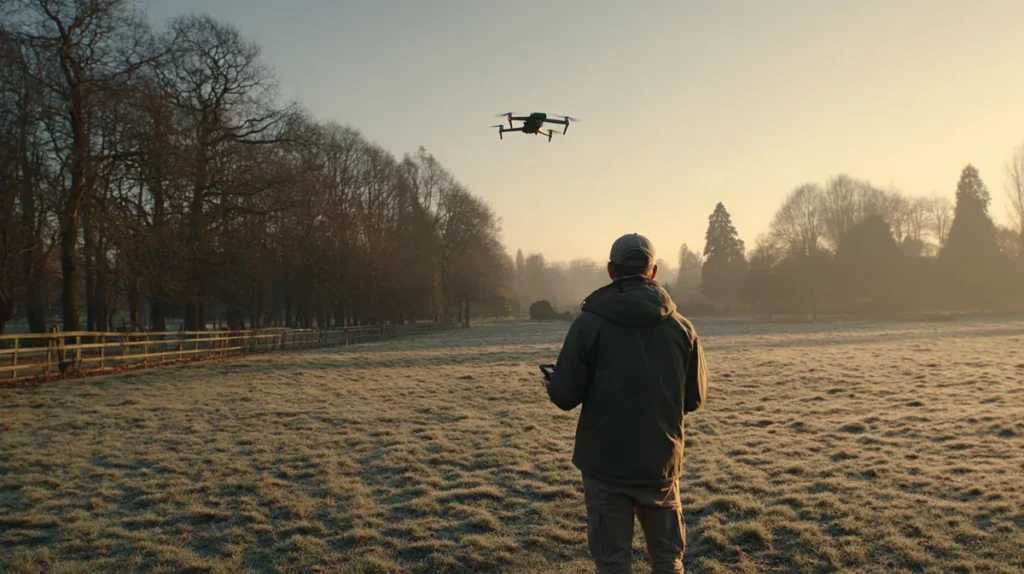
A drone preflight checklist is the set of checks you complete before every flight to confirm that you, your aircraft and the operating area are ready. Under Part 107, two rules set the minimum: 14 CFR 107.15 requires the remote pilot in command to check the drone before each flight to determine that it is in a condition for safe operation, and 14 CFR 107.49 requires an assessment of weather, airspace, people, property and ground hazards, a briefing for everyone directly participating, working control links, enough power for the intended flight and a secure payload. A good checklist turns those requirements into a short, repeatable routine.
Below is a copy-ready checklist organized in the order you will actually use it, with the rule or FAA guidance behind each line. It is general information based on the current text of Part 107 and FAA Advisory Circular 107-2A, not legal advice, and it does not replace your aircraft manufacturer’s procedures.
What the FAA Requires Before Every Flight
Section 107.49 lists the preflight actions the remote pilot in command must complete prior to flight. Section 107.15 adds that no one may operate a drone unless it is in a condition for safe operation, and that a flight must not continue once the pilot knows, or has reason to know, that the system is no longer safe. Section 107.19 makes the remote pilot in command directly responsible for, and the final authority on, the operation.
Part 107 does not prescribe a specific written form. The FAA’s Advisory Circular 107-2A includes a sample preflight assessment and inspection checklist in Appendix E and says remote pilots may use it or develop their own for their specific aircraft. It also recommends following the manufacturer’s inspection procedures where they exist. Preflight familiarization, inspection and actions are also listed knowledge areas in the FAA Remote Pilot Airman Certification Standards, so this material appears on the knowledge test as well.
Before You Leave: Pilot, Paperwork and Planning
Many problems can be caught at home, before you load the car. Start with yourself and your documents, then check the weather and airspace for the place and time you plan to fly.

Pilot readiness
- Fit to fly: no physical or mental condition that would interfere with safe operation (14 CFR 107.17). The FAA’s IMSAFE self-check covers illness, medication, stress, alcohol, fatigue and emotion.
- Alcohol and drugs: no flying within 8 hours of drinking any alcoholic beverage, while under the influence, with an alcohol concentration of 0.04 or greater, or while using a drug that affects your faculties contrary to safety (14 CFR 107.27 and 91.17).
- Currency: you passed the initial knowledge test or completed recurrent training within the previous 24 calendar months (14 CFR 107.65).
Documents to carry
- Your remote pilot certificate and identification, in your physical possession and readily accessible (14 CFR 107.7).
- Aircraft registration, and any certificate of waiver or authorization that applies to the flight.
Weather
- Flight visibility of at least 3 statute miles from the control station (14 CFR 107.51).
- Ability to stay at least 500 feet below and 2,000 feet horizontally from clouds (14 CFR 107.51).
- Wind, gusts and temperature within the manufacturer’s limits for your aircraft and batteries. Our guide on how to read a METAR and TAF explains the reports most pilots use.
Airspace and flight restrictions
- Airspace class at the site. Class B, C or D airspace, or the surface area of Class E airspace designated for an airport, requires prior ATC authorization (14 CFR 107.41), usually through LAANC authorization.
- Temporary flight restrictions and other NOTAM-based restrictions (14 CFR 107.47), plus any prohibited or restricted areas (14 CFR 107.45).
- Nearby airports, heliports and seaplane bases, so you do not interfere with their traffic patterns (14 CFR 107.43).
On Site: Assess the Area and Brief the Crew
When you arrive, walk the area before you unpack. Section 107.49(a) requires you to consider risks to people and property both on the surface and in the air, and AC 107-2A adds moving vehicles and people who may enter the area during the flight.
- People and property: note where non-participants, vehicles and buildings are, and plan the flight path so you do not fly over people unless the operation qualifies under 14 CFR 107.39.
- Ground hazards: power lines, trees, towers, water, uneven ground and anything that could interfere with the signal.
- Launch and landing: confirm the control station location, takeoff and landing site, and an alternate or emergency landing area are suitable (AC 107-2A, Appendix E).
- Loss of control: plan so the drone will pose no undue hazard to people, aircraft or property if control is lost (14 CFR 107.19).
Crew briefing
Section 107.49(b) requires that everyone directly participating is informed about the operating conditions, emergency procedures, contingency procedures, roles and responsibilities, and potential hazards. If you use a visual observer, agree how you will communicate, because the pilot, the person on the controls and the observer must maintain effective communication at all times (14 CFR 107.33). Flying alone, run through the same points out loud so you know what you will do if the link drops or a person walks into the area.
Aircraft Inspection: Airframe, Power, Links and Payload
Section 107.15 requires you to check the system before each flight, and AC 107-2A Chapter 7 recommends a visual or functional check of the whole system, scaled to your aircraft. For a typical small quadcopter, that means the following items.
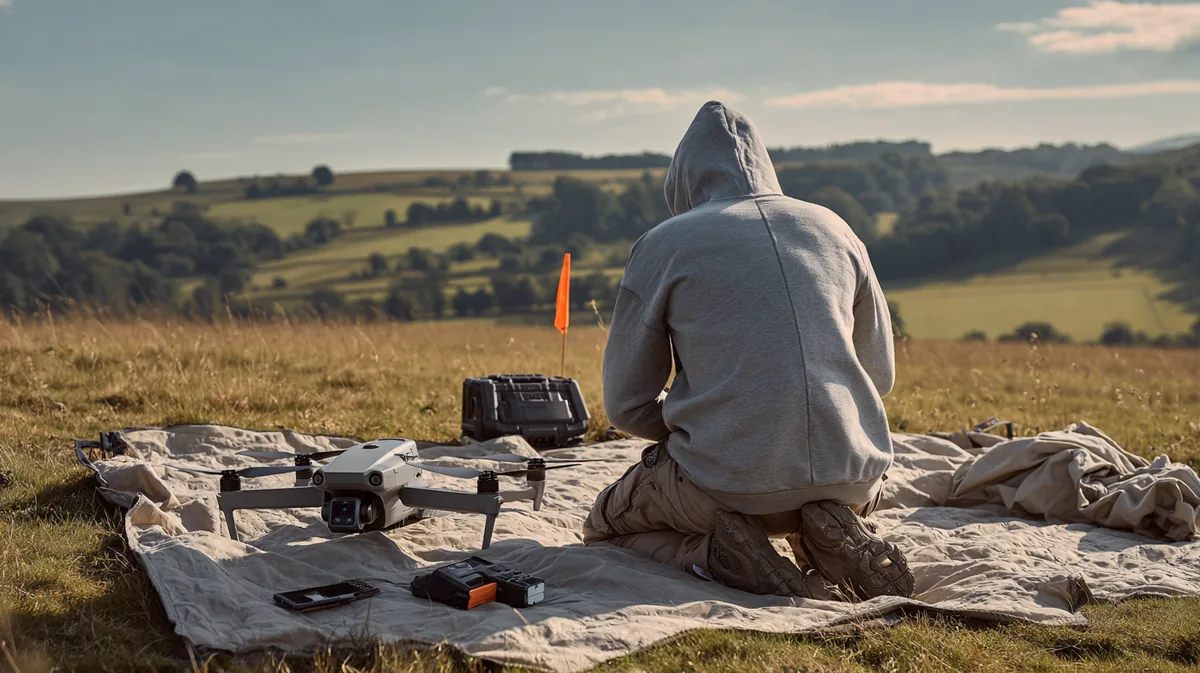
- Airframe and arms: no cracks, loose parts or damage to the body, arms or landing gear.
- Propellers and motors: blades undamaged and correctly installed, motors free of debris and turning smoothly.
- Registration marking: legible and displayed on an external surface (14 CFR 48.205).
- Batteries: aircraft, controller and display device charged, undamaged and seated firmly. Section 107.49(d) requires enough power to operate for the intended operational time, and AC 107-2A says this means enough to continue controlled flight to a normal landing.
- Control link: the controller and aircraft are connected and working properly (14 CFR 107.49(c)), with correct indications from antennas and the display.
- Navigation: the aircraft has acquired GPS from the minimum number of satellites the manufacturer specifies (AC 107-2A).
- Camera and payload: the camera and any attached object are secure and do not affect flight characteristics or controllability (14 CFR 107.49(e)).
- Remote ID: if your aircraft must broadcast Remote ID, confirm the built-in broadcast or broadcast module is working (14 CFR part 89).
- Lights: for flights during civil twilight or at night, anti-collision lighting visible for at least 3 statute miles must be on (14 CFR 107.29), and AC 107-2A notes it can reduce available power.
If you find a problem, AC 107-2A advises that flight operations should not occur until it is corrected. That includes an unscheduled software update the manufacturer requires to correct a problem.
Final Checks Before Takeoff
AC 107-2A ends its sample checklist with a short functional sequence. Run it every time, including after a battery change, because the 107.15 check applies before each flight.
- Calibrate the compass if the manufacturer requires it.
- Verify controller response for heading and altitude.
- Start the propellers and listen for any imbalance or irregular operation.
- Hover at a controlled low altitude and recheck all controls and stability before climbing out.
- Confirm you can keep the drone in visual line of sight for the whole flight, unaided except by corrective lenses (14 CFR 107.31).
Quick Reference: Checklist Items and the Rules Behind Them
| Checklist area | What to confirm | Source |
|---|---|---|
| Condition for safe operation | Drone checked before each flight; stop if it becomes unsafe | 14 CFR 107.15 |
| Operating environment | Weather, airspace and restrictions, people and property, ground hazards | 14 CFR 107.49(a) |
| Crew briefing | Conditions, emergency and contingency procedures, roles, hazards | 14 CFR 107.49(b) |
| Control link | All links between control station and aircraft working | 14 CFR 107.49(c) |
| Power | Enough for the intended operational time | 14 CFR 107.49(d) |
| Payload | Secure and not affecting controllability | 14 CFR 107.49(e) |
| Operations over people | Aircraft eligible for the category used | 14 CFR 107.49(f) |
| Documents | Certificate and ID on hand | 14 CFR 107.7 |
| Weather minimums | 3 statute miles visibility; 500 ft below and 2,000 ft from clouds | 14 CFR 107.51 |
After the Flight
AC 107-2A’s sample checklist also includes a post-flight review: decide whether repairs are needed before the next flight, and review equipment malfunctions, crew performance and any unexpected hazards. If a flight results in serious injury, loss of consciousness or certain property damage, 14 CFR 107.9 requires a report to the FAA within 10 calendar days. Our guide to drone accident reporting explains the thresholds.
Practice the Checklist With an Instructor
A checklist is easiest to learn in the field with someone watching. Drone Universities has trained pilots since 2014, and our FAA Certified Flight Instructors travel to students in all 50 states. Our in-person Part 107 test preparation covers the preflight rules on the knowledge test, and drone flying lessons for individuals let hobbyists, new Part 107 pilots and retirees practice inspections, briefings and low-hover checks on their own aircraft. To request training, call 1.818.255.0406 or visit us at 7222 Canoga Ave., Los Angeles, CA 91303.
Frequently Asked Questions
Is a written preflight checklist required under Part 107?
Part 107 requires the preflight actions in 107.49 and the safety check in 107.15, but it does not require a particular written form. The FAA provides a sample checklist in AC 107-2A Appendix E and recommends tailoring a checklist to your aircraft and following the manufacturer’s procedures.
Do recreational flyers have to follow 107.49?
No. Part 107 does not apply to aircraft flown under the recreational exception in 49 U.S.C. 44809. Recreational flyers still need to follow the FAA’s rules for their category, and the same checklist is a practical way to fly safely.
Do I need to repeat the checklist after a battery swap?
Section 107.15 requires a check before each flight, so run at least the aircraft, power, link and final checks again after every battery change or landing. Recheck weather and airspace too if time has passed, conditions have changed or you have moved to a new site.
Is the preflight inspection on the Part 107 knowledge test?
Yes. The FAA Remote Pilot Airman Certification Standards list preflight familiarization, inspection and actions under operating rules, and preflight inspection under maintenance and inspection procedures. The FAA’s Certificated Remote Pilots page explains how to take the test and apply for your certificate.
Can Drone Universities help me prepare for the Part 107 exam?
Yes. Our instructors cover the Part 107 rules, including preflight requirements, in person at your location. If you do not pass the FAA Part 107 exam after completing our training, we will either refund your training fee or retrain you at no additional cost.