Earning your FAA Part 107 Remote Pilot Certificate is the first step to legally operating a drone for commercial purposes in the United States. But if you want to secure higher-paying jobs, work in specialized industries, and stand out from the competition, you’ll need to go further.
Advanced drone certifications and endorsements not only build your skill set but also signal to clients and employers that you can handle complex, high-stakes operations.
Why Go Beyond FAA Part 107?
The Part 107 certification covers the basics—airspace rules, safety, and operational procedures. While that’s essential, many industries demand deeper expertise, such as:
- Thermal inspections
- Night operations
- Mapping and surveying
- Cinematic drone work
- Emergency response flying
For the FAA Part 107 basics, see our FAA Part 107 Certification Guide.
Key Certifications & Endorsements to Consider
1. Night Operations Training
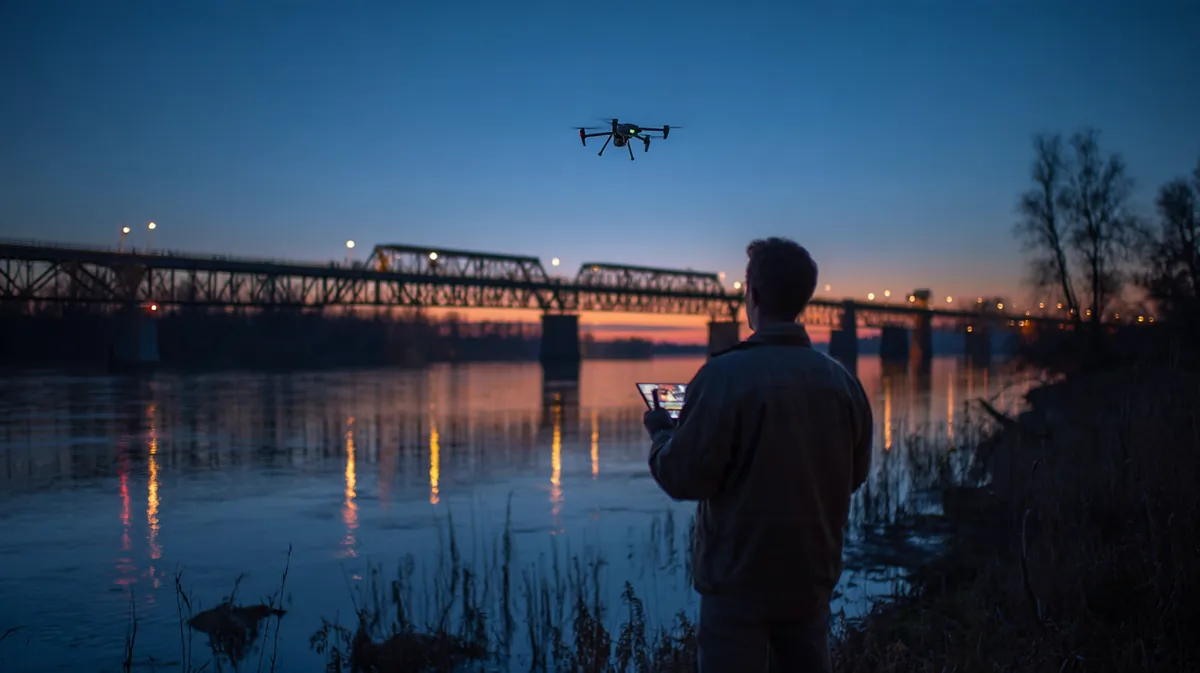
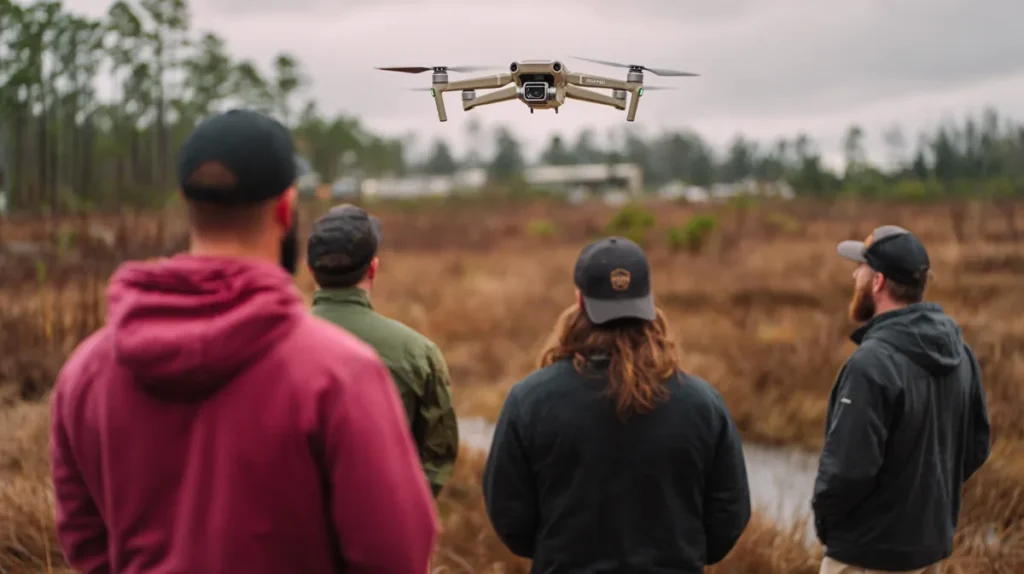
Since April 2021, Part 107 pilots can fly at night without a waiver if they passed the initial knowledge test or completed the required online training after April 6, 2021, stay current with recurrent training, and use anti-collision lighting visible for 3 statute miles (see Part 107 night operations), but proficient night flying requires additional hands-on training. Night operations are valuable for industries like security, search and rescue, and event coverage. Our Drone Safety Protocols for Commercial Operations include night flying best practices.
2. Drone Mapping & Surveying Certification
For construction, agriculture, and mining, accurate aerial maps and 3D models are crucial. A dedicated mapping course, like our Drone GIS and Mapping Course, can make you an industry go-to for data-rich aerial surveying.
3. Thermal Imaging Certification
Thermal drones are in demand for inspections of power lines, pipelines, solar farms, and buildings. Specialized training ensures you can correctly interpret thermal data for maintenance and safety.
4. Cinematic Drone Filming Endorsements
If you want to work in media, advertising, or film production, advanced aerial cinematography skills are essential. Our Drone Photography & Videography Course can help you deliver stunning, production-ready footage.
5. Public Safety & Emergency Response Training
Police, fire, and rescue agencies use drones for situational awareness, search and rescue, and disaster assessment. A course based on Search and Rescue Missions with Drones can prepare you for high-pressure deployments.
6. Industry-Specific Endorsements
Specialized endorsements—such as Drones in Agriculture, Drones in Oil & Gas, or Drones in Construction & Inspection—give you a competitive edge in niche markets.
Advanced Certifications for Public Safety Drone Programs
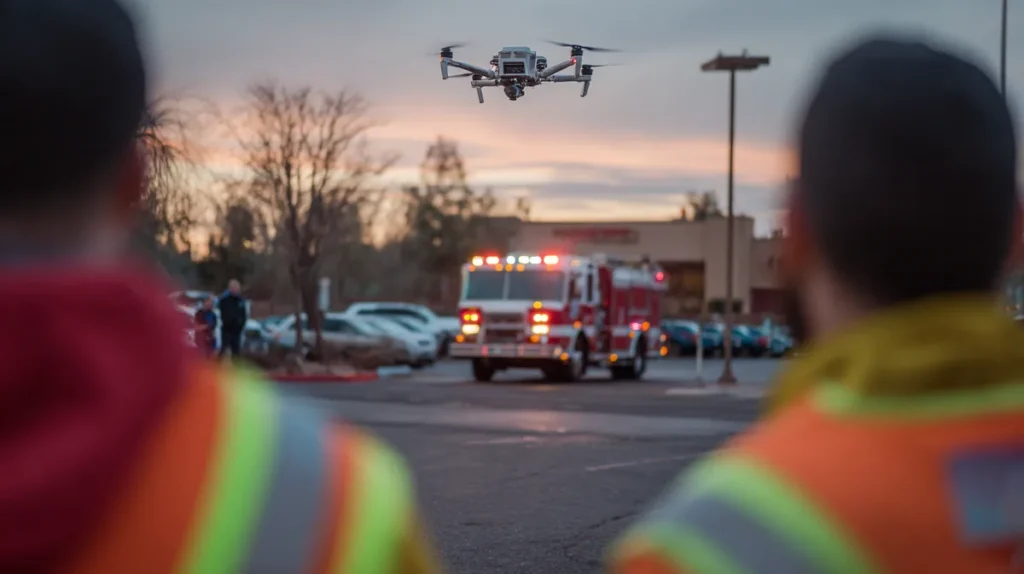
For police, fire and emergency management agencies, Part 107 is necessary but not sufficient. Public safety missions often take place at night, over people, beyond visual line of sight and inside controlled airspace, which are the conditions Part 107 restricts by default. Agencies that build compliant programs combine the right regulatory framework, the right authorizations and structured training.
Part 107 vs. Certificate of Authorization (COA): The Public Aircraft Framework
Government agencies can operate under two FAA pathways. Under Part 107, the agency flies as a civil operator: pilots can be certified within a few weeks, the certificate belongs to the individual pilot, and standard commercial rules apply. Under a Certificate of Authorization (COA), the agency operates public aircraft for governmental functions. A COA can include provisions for routine operations in specified controlled airspace, night operations and operations over people during life safety incidents, and it allows the agency to self-certify its pilots and aircraft. Emergency COAs can be issued quickly for immediate life safety situations.
The trade-off is administrative effort. An initial COA typically takes several months to obtain and requires documented operational procedures, coordination with the FAA and ongoing compliance oversight. Many agencies pursue both paths at once: Part 107 for every pilot as a baseline of individual competency, and a COA for the department to provide operational flexibility during emergencies.
Waivers and Authorizations for Tactical Operations
- Beyond visual line of sight (BVLOS): Searches and pursuits frequently take the aircraft beyond the pilot’s view. BVLOS waivers, requested through the FAA Aviation Safety Hub (see how to apply for a Part 107 waiver), require documented risk mitigation, visual observer or technology-based alternatives, lost-link procedures and coordination plans with manned aircraft. Some agencies include tactical BVLOS provisions in their COA.
- Night operations: Since the April 2021 rule change, Part 107 pilots no longer need a waiver to fly at night. The remote pilot must have passed the initial knowledge test or completed the required training after April 6, 2021 and be current, and the aircraft must carry anti-collision lighting visible for 3 statute miles (14 CFR 107.29). Agencies should still train pilots on spatial disorientation, distance judgment in darkness and thermal interpretation.
- Operations over people: Part 107 permits flight over people only for aircraft that meet specific category requirements or operations that qualify for an exception. This includes your own officers, firefighters and paramedics at a scene, not only the public. COAs can include limited provisions for life safety incidents.
- Controlled airspace and LAANC: Most jurisdictions sit near airports or helipads. Part 107 operators use LAANC for routine approvals and manual requests for complex cases, while a COA can pre-authorize operations in specified airspace. Establish procedures with local airport authorities and air traffic control before an emergency occurs.
Training Requirements Beyond the Knowledge Test
The Part 107 knowledge test covers airspace, weather and aircraft operations. Public safety pilots need additional training in:
- Constitutional and legal operations: Fourth Amendment considerations, warrant requirements versus exigent circumstances, reasonable expectation of privacy, and data retention and public records obligations. Missteps can make evidence inadmissible and expose the agency to civil liability.
- Thermal imaging interpretation: Understanding emissivity, recognizing reflections and false readings, adjusting gain and level settings, and accounting for weather effects when locating people or assessing fires.
- Tactical flight: Rapid launch procedures, coordinating with ground units and command, maintaining tracking during pilot handoffs, managing battery life on extended missions and documenting scenes systematically for photogrammetry and court use.
- Emergency procedures: GPS or link loss, return-to-home failures, battery emergencies, flight near power lines, high winds and reduced visibility, and deconfliction with helicopters and other manned aircraft.
Data Management and the Evidence Chain
Drone footage frequently becomes evidence. Agencies should be able to show who accessed the original files, prove that footage was not altered, and explain their retention policy. Core practices include secure storage and backup, chain of custody documentation, file integrity verification with hash values, access logging, and defined retention and disposal schedules. Pilots should also be prepared to testify about how footage was collected and what it shows, and records staff should understand how open records requests and redaction apply to drone data.
Recurrent Training
Part 107 pilots must complete the free FAA online recurrent training every 24 calendar months. For public safety operations, that is a minimum rather than a complete program. Strong agencies add regular hands-on proficiency checks, scenario-based exercises, emergency procedure practice, updates on regulations and case law, and familiarization with new aircraft and software. A fully structured program, including pilot certification, COA approval, waivers and training, typically takes six to twelve months to reach full operational readiness.
Drone Universities builds public safety training around these requirements. Explore our police drone training programs and custom drone curriculum for government and law enforcement agencies. Request training for your agency by calling 1.818.255.0406.
How Advanced Certifications Boost Your Career
- Higher Earning Potential: Specialized skills allow you to charge premium rates
- Expanded Job Opportunities: Qualify for contracts and roles requiring advanced expertise
- Increased Client Confidence: Certifications prove your ability to deliver safe, high-quality work
- Regulatory Compliance: Meet industry-specific legal and safety standards
For more career insights, read How to Start Your Career as a Drone Pilot.
Building a Strategic Certification Path
If you’re aiming to scale your drone career, consider this progression:
- FAA Part 107 Certification
- Night Operations & Safety Endorsements
- One or two industry-focused certifications (e.g., mapping, thermal)
- Specialized high-demand training (public safety, agriculture, inspections)
The Future of Drone Certifications
As drone technology advances, new certifications will emerge for AI-powered autonomous flight, swarm operations, and drone delivery services. Early adopters who build skills in these areas will have a major advantage.
For an industry-wide outlook, see The Future of the Drone Industry in the USA.
Final Thoughts
FAA Part 107 is your license to fly commercially, but advanced certifications and endorsements are your ticket to bigger opportunities and higher earnings. By investing in specialized skills, you can position yourself as a top-tier drone professional capable of taking on the most complex projects.
Pro Tip: Combine certifications with hands-on portfolio work to showcase your expertise. Explore our Drone Courses to start building your competitive edge today.
If you have not yet earned your Part 107 certificate, Drone Universities offers in-person FAA Part 107 test preparation anywhere in the USA. Call 1.818.255.0406 to request training.